

Post author: Royalcig
Publication date: 22/11/2026
Was your pod working normally, but now no longer responds when you inhale? No indicator lights up and no vapour is produced, even though the battery still seems to be charged?
Was your pod working normally, but now no longer responds when you inhale? No indicator lights up and no vapour is produced, even though the battery still seems to be charged?
On some models equipped with a button, manual activation may even continue to work normally.
This situation may be related to the automatic draw detection system, also known as Auto Draw. A build-up of condensation, an obstruction in the air passage, an unsuitable setting or an electronic fault can interfere with its operation.
Before concluding that your pod is out of order, it is important to distinguish between the different possible causes.
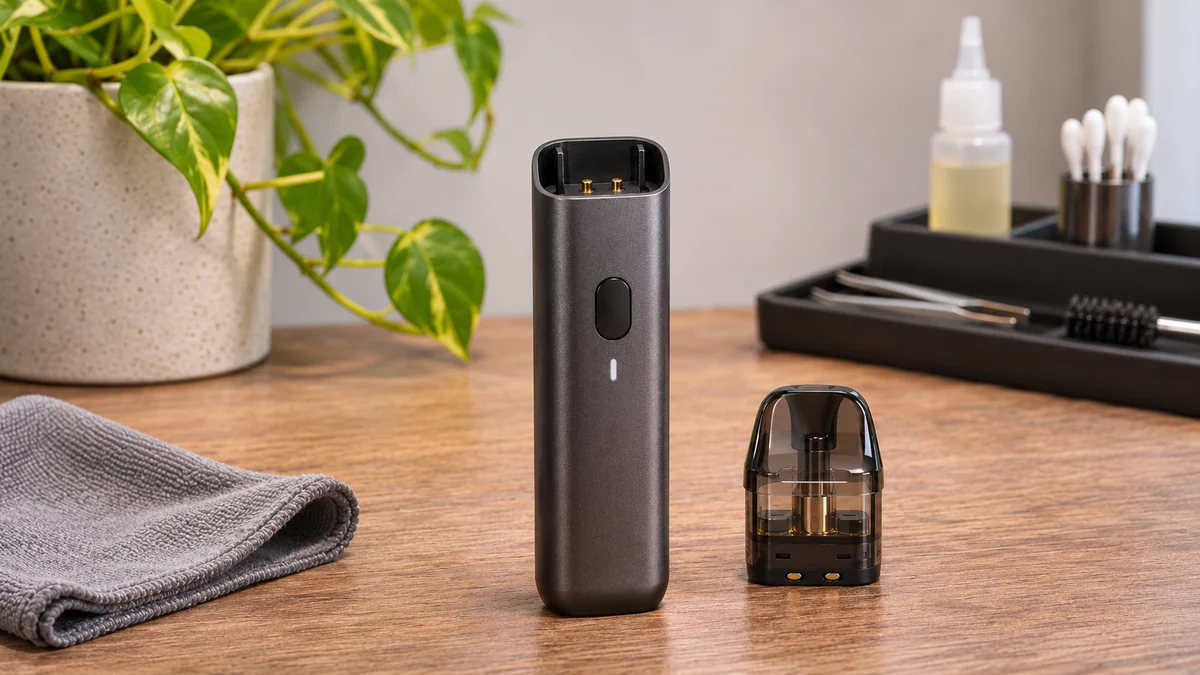
1. How does a pod's automatic draw sensor work?
Unlike electronic cigarettes that require a firing button, some pods have a system capable of automatically detecting a draw.
When the user inhales through the mouthpiece, a change in pressure occurs in the device's air circuit.
A sensor detects this change and sends information to the electronic circuit. The latter then controls the power supplied to the coil, provided that the operating conditions are met.
Automatic activation therefore relies on several elements:
- An air passage allowing the pressure to change.
- A draw sensor.
- An electronic control circuit.
- A sufficiently charged battery.
- A correctly recognised cartridge.
The draw sensor should not be confused with the cartridge's electrical contacts.
A pod can correctly recognise its coil while experiencing a draw detection fault.
2. Can condensation prevent automatic activation?
Condensation is one possible cause of irregular operation of the Auto Draw system.
During use, some of the aerosol may condense in the air channels or near the cartridge compartment.
Depending on the design of the device, these small droplets may interfere with airflow or affect detection of the pressure change.
Several symptoms may then occur:
- Delayed activation.
- Intermittent draw detection.
- A complete lack of response.
- Irregular operation after a period of inactivity.
Manufacturers VOOPOO and Innokin notably mention condensation build-up among the factors that may interfere with automatic activation.
How can you check for condensation?
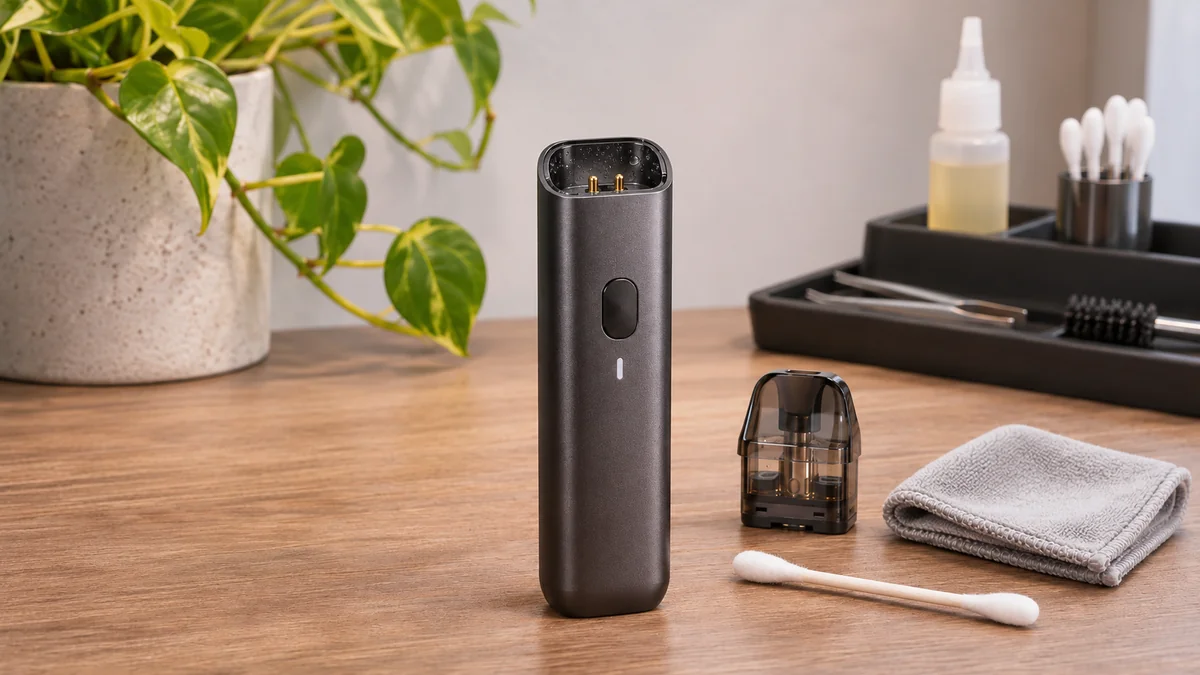
Switch off your device if this function is available, then remove the cartridge in accordance with the manual.
Inspect its compartment and look for any signs of moisture.
Gently wipe the accessible surfaces with a soft, dry, lint-free cloth.
Never insert a needle, metal rod or cleaning liquid into the sensor opening.
If e-liquid has entered the electronic components, stop using and charging the device until it has been inspected.
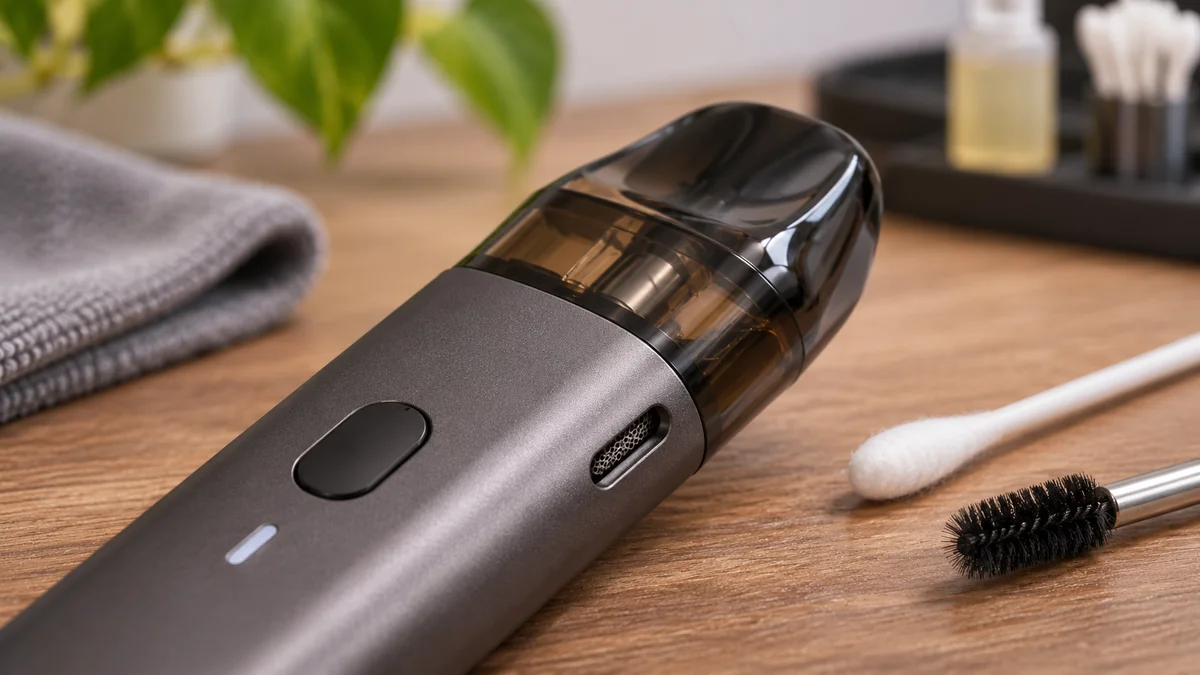
3. A blocked air inlet can interfere with the sensor
Automatic activation depends on airflow and pressure changes produced during inhalation.
A build-up of dust, condensation or residue may interfere with this process.
Areas to examine include:
- The mouthpiece.
- The air inlet openings.
- The accessible cartridge channel.
- The cartridge compartment.
On some models with adjustable airflow, its position can also influence the sensitivity of the activation system.
Check that the openings are not blocked and that the settings comply with the manufacturer's instructions.
Do not attempt to compensate for a fault by inhaling excessively hard or deliberately blocking the air inlets.
If your device also has an unusually tight draw, see our article on electronic cigarettes that are hard to draw on.
4. Why does my pod work with the button but no longer with automatic draw?
Some pods have two activation systems:
- Manual activation by button.
- Automatic activation by inhalation.
When the button works normally but inhaling no longer produces any response, this difference provides a useful clue.
It suggests that the battery and heating system can operate, while the automatic control system has a fault.
The problem may notably involve the sensor, air circuit or selected activation mode.
However, this symptom does not establish that the sensor itself is defective.
First check the activation settings described in your device's manual.
If the behaviour remains abnormal, have the equipment inspected rather than trying to bypass the detection system.
5. Is automatic draw mode disabled?
Some devices allow different activation modes to be selected.
Depending on the model, it may be possible to use only the button, only automatic draw, or both systems simultaneously.
An unintended change to the settings may therefore explain why the pod no longer responds as before.
It is also important to distinguish between locking the button, locking the settings and switching the device off completely.
These functions do not necessarily have the same effects.
Configuration procedures vary between manufacturers. There is therefore no universal button combination for reactivating the Auto Draw system.
Consult the manual for the exact model of your pod.
6. Can a defective cartridge prevent draw detection?
A cracked, incorrectly positioned or poorly sealed cartridge can alter airflow.
It may also encourage liquid to accumulate in the compartment near the electronic components.
In some situations, the sensor may work normally while power to the coil is interrupted for another reason.
It is therefore necessary to distinguish a failure to detect inhalation from a failure to heat.
Visually check the condition and position of the cartridge.
When the device no longer correctly recognises its coil, our guide to pods that no longer recognise their cartridge describes the main possible causes.
7. How can the cause of the fault be identified from the symptoms?
The device's responses can sometimes help guide the diagnosis.
| Observed symptom | Possible cause |
|---|---|
| No indicator during inhalation | Sensor, power supply or activation mode |
| Button works but inhalation does not | Automatic activation system |
| Intermittent activation | Condensation or disrupted airflow |
| Indicator flashes without heating | Electronic protection or connection fault |
| No response, even with the button | Battery, lock or electronic circuit |
| Activation without inhalation | Fault requiring immediate cessation of use |
This table is an aid to identifying symptoms, not a definitive diagnosis.
Indicator light codes and electronic protections vary by model.
If your device no longer shows any sign of power, also see our article on electronic cigarettes that no longer charge.
8. Can you repair a pod's draw sensor yourself?
The draw sensor is generally integrated into the device's internal circuit.
Accessing it may require opening the casing and working near the battery.
Users should not carry out these operations unless they are expressly provided for by the manufacturer.
In particular, avoid:
- Dismantling the electronic casing.
- Drilling or enlarging a draw opening.
- Using compressed air in the sensor.
- Applying a heat source to accelerate drying.
- Modifying electrical connections.
- Attempting to bypass the device's protections.
If superficial cleaning of accessible parts and the checks described in the manual do not identify the cause of the problem, a technical inspection is necessary.
In the event of spontaneous activation, overheating or an unusual smell, stop using and charging the pod immediately.
Frequently asked questions about pod draw sensors
A blocked air circuit, condensation build-up or a sensor fault may explain this change. Do not continually compensate for this problem by inhaling harder.
Yes. Like any electronic component, a sensor can develop a fault. However, an activation fault does not necessarily mean that the sensor is out of order.
Liquid may have reached the air channel or cartridge compartment. Incorrect positioning or closure of the cartridge may also be responsible.
Not necessarily. The problem may originate from the cartridge, air passage, activation settings or electronic circuit.
Do not introduce water into the electronic compartment or sensor opening. Cleaning must be limited to accessible parts and comply with the manufacturer's instructions.
Conclusion
A pod that no longer detects inhalation does not necessarily have a permanent fault.
Condensation, obstructions in the air passage, activation settings and the condition of the cartridge may explain some anomalies.
The distinction between manual and automatic activation also provides a useful clue to guide the diagnosis.
If the problem persists, have the device inspected without working directly on the sensor or battery.
Electronic cigarettes are not risk-free. Nicotine is an addictive substance.