

Post author: Royalcig
Publication date: 17/11/2026
Choosing an e-liquid is not just about selecting a flavour. It is important to understand nicotine strengths, PG/VG ratios and device compatibility.
Choosing an e-liquid is not just about selecting a flavour. Between different nicotine strengths, PG/VG ratios, nicotine salts and bottle sizes, several characteristics need to be understood to use an electronic cigarette correctly.
A liquid suited to one device may not necessarily be suitable for another. Its viscosity, nicotine concentration and the design of the coil affect how it works.
So how should you interpret the information on a bottle? What is the difference between a 50/50 e-liquid and a 30/70 liquid? How can you determine the nicotine concentration and identify liquids compatible with your device?
This guide is intended for adult smokers considering vaping as part of an effort to stop smoking, and for vapers wishing to better understand the composition of their e-liquids.
1. What is an e-liquid and what does it contain?
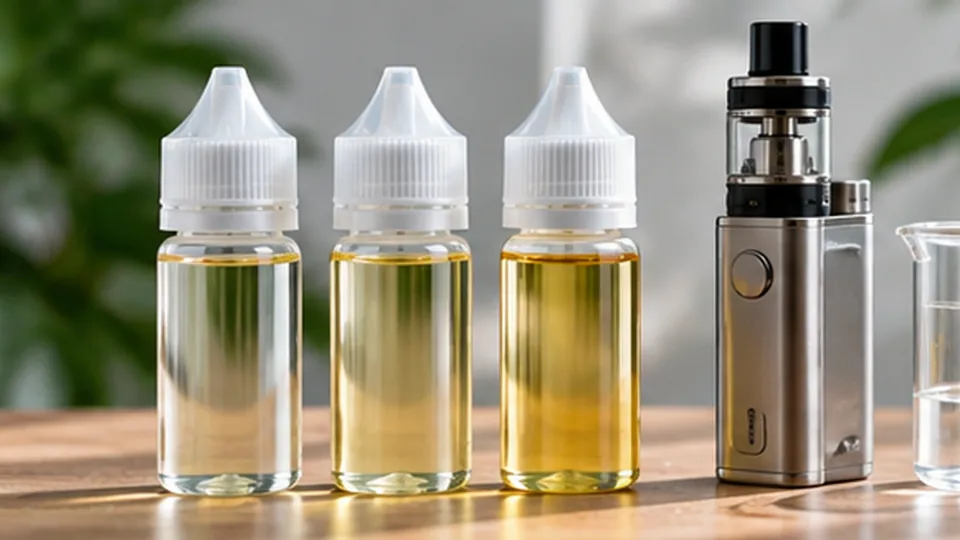
An e-liquid is a preparation intended to be heated in an electronic cigarette to produce an inhalable aerosol.
Its composition generally relies on several ingredients.
- Propylene glycol (PG): a relatively fluid liquid used, in particular, as a carrier for flavourings.
- Vegetable glycerine (VG): a more viscous substance which contributes to aerosol production.
- Flavourings: these determine the taste characteristics of the liquid.
- Nicotine: present only in products that contain it, at various concentrations.
Some e-liquids may also contain small amounts of water or other permitted ingredients.
The exact composition should be checked on the product label.
It is important to remember that the absence of combustion does not mean the absence of risk. When heated, some substances may be emitted or formed, particularly under unsuitable conditions of use.
2. Understanding PG/VG ratios: 50/50, 70/30 or 30/70
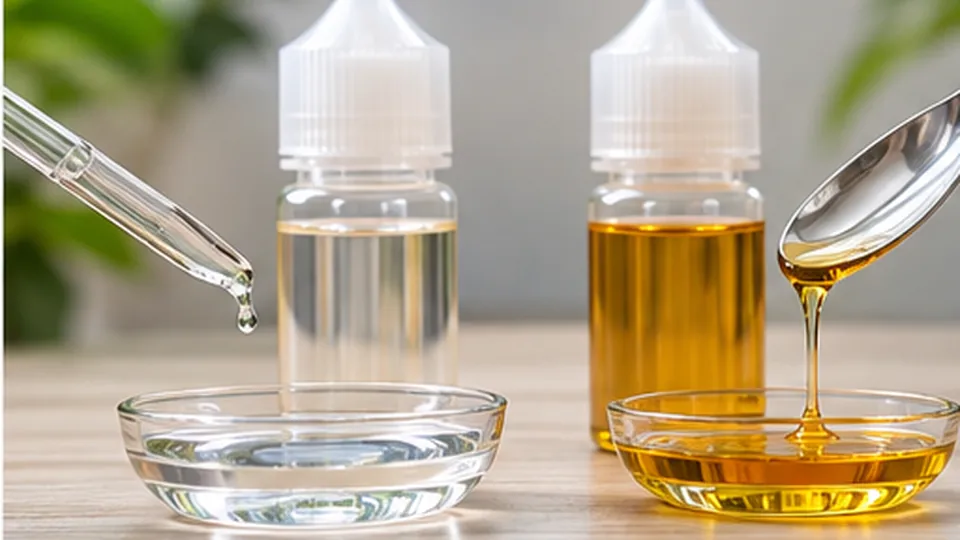
The PG/VG ratio indicates the proportion of propylene glycol and vegetable glycerine in a liquid.
It affects its viscosity, how the coil receives liquid and the sensations experienced when inhaling.
50/50 PG/VG e-liquid
A 50/50 liquid contains balanced proportions of PG and VG.
This ratio is often found in e-liquids intended for devices operating at moderate power levels.
It may be compatible with many pods, kits and clearomisers, provided the equipment manufacturer permits this composition.
70/30 PG/VG e-liquid
A 70/30 PG/VG ratio contains more propylene glycol.
The liquid is generally thinner. It may suit some systems with small liquid inlets that operate at low power.
The higher PG proportion may increase the sensation in the throat, although this also depends on nicotine and the other ingredients.
30/70 PG/VG e-liquid
A 30/70 PG/VG liquid contains mostly vegetable glycerine.
It is more viscous and may produce more aerosol under suitable technical conditions.
It is often used with systems designed for higher liquid flow rates and power levels.
However, liquid that is too thick may have difficulty feeding some small coils.
PG/VG ratio comparison table
| PG/VG ratio | Typical properties | Compatibility to check |
|---|---|---|
| 70/30 | Relatively thin liquid | Small, low-power systems |
| 50/50 | Intermediate viscosity | Many pods and kits |
| 30/70 | Thicker liquid | Equipment suited to VG-rich liquids |
| 20/80 | High viscosity | Specifically compatible systems |
These are general guidelines. The manufacturer's instructions remain the reference for determining e-liquid compatibility.
3. How should nicotine strengths be understood?
Nicotine is an addictive substance naturally present in tobacco.
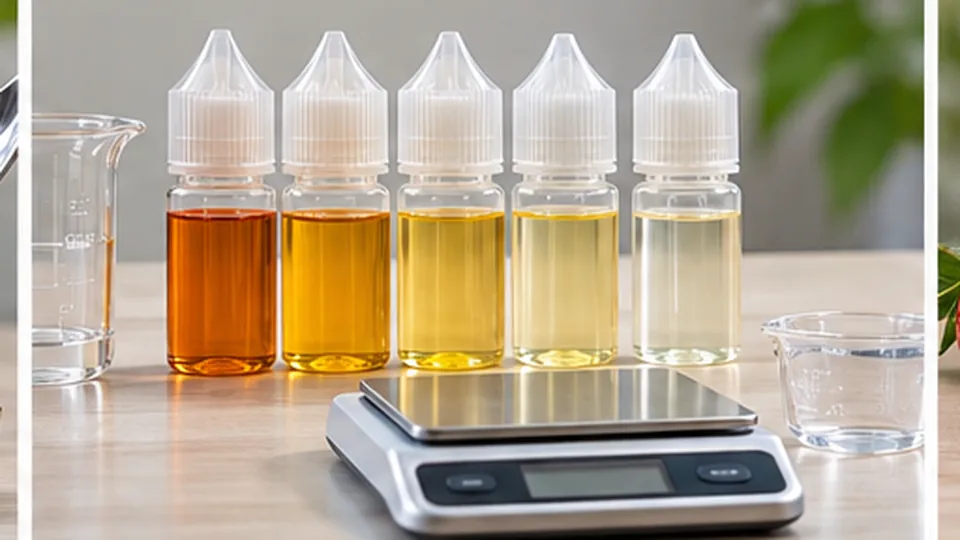
In e-liquids, its concentration is generally expressed in milligrams per millilitre (mg/ml).
For example, a liquid labelled 6 mg/ml contains 6 milligrams of nicotine per millilitre of preparation.
Common concentrations include:
- 0 mg/ml: no added nicotine.
- 3 mg/ml: 3 mg of nicotine per millilitre.
- 6 mg/ml: 6 mg of nicotine per millilitre.
- 12 mg/ml: 12 mg of nicotine per millilitre.
- 16 mg/ml: 16 mg of nicotine per millilitre.
- 20 mg/ml: the maximum permitted concentration in nicotine-containing liquids marketed in France.
These concentrations do not automatically correspond to a precise number of cigarettes smoked per day.
Why is the number of cigarettes not enough?
Two people smoking the same number of cigarettes may have different levels of dependence.
Dependence is affected by smoking frequency, how a person smokes and how soon the first cigarette is smoked after waking.
Furthermore, the amount of nicotine delivered by an electronic cigarette varies with the device, its power and how it is used.
There is therefore no universal table that precisely matches 5, 10 or 20 daily cigarettes with a particular nicotine concentration.
What signs may indicate an unsuitable strength?
In an adult dependent on nicotine, insufficient exposure may be accompanied by a persistent urge to smoke, irritability or difficulty concentrating.
Conversely, excessive exposure may cause nausea, headaches, dizziness or palpitations.
These symptoms are not, on their own, a diagnosis.
If someone feels unwell, use should stop and medical advice should be sought. A healthcare professional is best placed to assess dependence and organise smoking cessation support.
4. Freebase nicotine or nicotine salts: what is the difference?
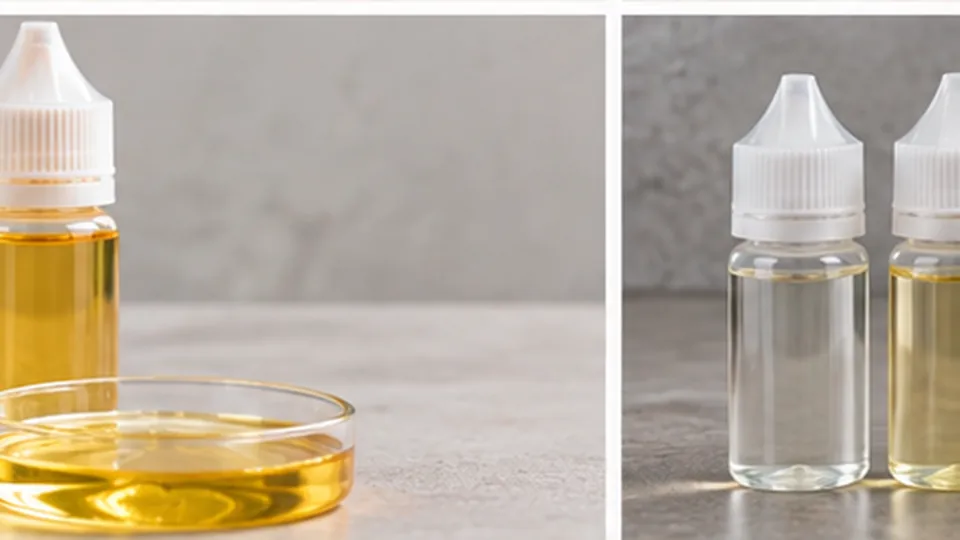
Nicotine-containing e-liquids mainly use two forms of nicotine.
Conventional or freebase nicotine
Freebase nicotine is used in many e-liquids.
Depending on its concentration and the product formulation, it may contribute to a stronger throat sensation when inhaled.
Nicotine salts
Nicotine salts are produced by combining nicotine with certain acids in a controlled formulation.
They may give a different throat sensation, sometimes less pronounced at a comparable concentration.
However, this does not mean that they are harmless or less addictive.
Their use must be assessed with reference to liquid concentration, device power and the quantity of aerosol inhaled.
A high nicotine concentration in a device producing large amounts of aerosol may lead to substantial exposure.
Remember: the form of nicotine is no substitute for assessing nicotine dependence in an adult smoker.

5. Understanding the different flavour families
E-liquids are available in many flavour families.
Choosing a flavour is a matter of individual sensory preference. It is not a measure of the health safety of a liquid.
Tobacco flavours
These formulations aim to reproduce some notes associated with tobacco.
They may have dry, woody, toasted or slightly sweet characteristics.
A tobacco flavour does not necessarily contain tobacco itself: the composition depends on the manufacturer's formulation.
Fruit flavours
This family includes notes reminiscent of berries, citrus fruit, apple, mango and exotic fruits.
Formulations may combine several flavours.
Menthol and cooling flavours
Some liquids contain ingredients that create a cooling sensation.
A mint flavour must be distinguished from a cooling agent: a liquid can feel cold without having a pronounced mint taste.
Dessert flavours
This family includes notes reminiscent of vanilla, caramel, cereals and certain pastries.
Complex blends
Some formulations combine fruit, menthol, dessert or tobacco notes.
The commercial name of a flavour alone does not reveal its exact composition.
It is essential to stress that an ingredient approved for food use is not automatically without risk when heated and inhaled.
6. Which e-liquid suits which electronic cigarette?
Compatibility between an e-liquid and an electronic cigarette depends mainly on the coil, liquid supply and heating conditions.
For a low-power pod
Many compact pods use coils designed to operate at relatively low power.
These devices generally require liquids fluid enough to feed the absorbent material properly.
50/50 formulations are common in this category, but each device has its own specifications.
For a tight-draw clearomiser
Clearomisers designed for indirect, or MTL, inhalation often use relatively high-resistance coils.
Liquid compatibility depends, in particular, on the liquid inlets and the power range used.
For a direct-lung device
DL devices generally operate with higher airflow and power.
Some coils are designed for liquids richer in vegetable glycerine.
In these configurations, the quantity of liquid vaporised can be substantial. Particular attention must therefore be paid to nicotine concentration.
Why is the ohm rating not enough?
Two coils with the same electrical resistance may have different designs.
The size of the liquid supply openings, the materials used and the recommended power affect how they work.
It is therefore better to consult the manufacturer's specifications rather than relying only on the ohm rating.
7. 10 ml, 50 ml or 100 ml e-liquid: understanding bottle formats
E-liquids are sold in different packaging sizes.
10 ml bottles
In France, nicotine-containing liquids sold to consumers are subject to a limit of 10 ml per refill bottle.
They must also comply with the applicable concentration, labelling and safety requirements.
Larger nicotine-free formats
Nicotine-free flavoured preparations also exist in larger bottles, notably 50 or 100 ml.
It is important to distinguish between:
- The volume of liquid in the bottle.
- The bottle's total capacity.
- Any space available for dilution.
For example, a bottle containing 50 ml of preparation may have a larger capacity. This does not mean its contents contain nicotine.
What does “ready for a nicotine booster” mean?
This expression is generally used for certain nicotine-free flavoured preparations intended to be diluted according to the manufacturer's instructions.
Adding another preparation changes, among other things, the final nicotine concentration, ingredient proportions and flavour intensity.
Such handling requires following the manufacturer's instructions and the safety precautions applicable to nicotine-containing products.
8. How can you check e-liquid quality and traceability?
Labelling is an essential source of information.
Depending on the product and applicable regulations, information to look for includes:
- Identification of the manufacturer or the person responsible for placing it on the market.
- The declared composition.
- Bottle volume.
- Nicotine concentration, where present.
- Regulatory warnings and pictograms.
- A batch number for traceability.
- Storage and usage instructions.
For nicotine-containing liquids, regulations impose specific requirements concerning packaging and information supplied to consumers.
A claimed geographical origin alone does not guarantee the absence of hazardous substances.
Likewise, terms such as “natural”, “premium” or “superior quality” do not constitute scientific proof of harmlessness.
9. How should e-liquid be stored?
E-liquids should be stored in accordance with the manufacturer's instructions.
A few precautions are essential.
- Keep bottles in their original packaging, tightly closed.
- Avoid excessive temperatures and prolonged exposure to light.
- Keep liquids out of reach of children and animals.
- Never transfer e-liquid into a food container.
- Follow storage and use-by instructions.
- Do not use a liquid with an unusual abnormality or uncertain origin.
Nicotine can cause poisoning, particularly if accidentally swallowed or following significant skin contact.
In the event of accidental exposure, contact a poison control centre or healthcare professional. Call emergency services if serious symptoms occur.
10. Common mistakes when choosing an e-liquid
Ignoring the PG/VG ratio
A liquid that is too viscous may not supply some coils properly and can lead to abnormal heating.
Conversely, a very thin liquid may not suit certain vaporisation systems.
Choosing nicotine only from the number of cigarettes smoked
This method ignores differences in dependence and how the device works.
Confusing concentration with total nicotine quantity
Concentration is expressed in mg/ml, while the total quantity also depends on bottle volume.
A 10 ml bottle at 6 mg/ml therefore contains 60 mg of nicotine in total. This does not mean that the user absorbs that amount.
Confusing cooling sensation with nicotine content
A very cooling liquid is not necessarily higher in nicotine. Cooling effect and nicotine concentration are separate characteristics.
Using ordinary food flavourings in an electronic cigarette
A flavouring intended for food is not automatically suitable for inhalation.
Ingredients must be evaluated for their intended use, and oils or substances not designed for vaping should not be used.
Assuming nicotine-free liquid is risk-free
A 0 mg/ml liquid contains no added nicotine, but its aerosol may still expose the user to potentially harmful substances.
11. E-liquids and stopping smoking: what precautions matter?
An electronic cigarette may be considered by some adult smokers as part of an attempt to stop smoking.
However, choosing an e-liquid must not be presented as medical treatment or a guarantee of smoking cessation.
Scientific studies suggest that nicotine-containing electronic cigarettes may help some adult smokers stop smoking, but vaping is not without health risks.
In its assessment published in 2026, the French Agency for Food, Environmental and Occupational Health & Safety (Anses) highlights possible health effects associated with exposure to aerosols.
For someone who does not smoke, the best option remains not to start vaping.
Healthcare professionals can offer smokers who wish to stop an assessment of dependence and suitable support methods, including nicotine replacement therapies with established instructions for use.
The health goal remains stopping tobacco completely and, eventually, stopping vaping as well.
12. FAQ: frequently asked questions about e-liquids
First check the liquid's compatibility with the device, particularly its PG/VG ratio and the manufacturer's recommendations. For an adult smoker using nicotine-containing liquid, the strength also requires an appropriate assessment of dependence.
A 50/50 ratio has equal amounts of PG and VG. A 30/70 ratio contains more vegetable glycerine and generally has a higher viscosity.
There is no universal equivalence between the number of cigarettes smoked daily and an e-liquid's nicotine concentration. The level of dependence, device characteristics and way it is used must be considered.
It depends on the liquid's exact composition and the pod's design. A PG-rich ratio may be compatible with some devices, but the manufacturer's recommendations must be checked.
The main difference concerns their chemical formulation and the sensations they may create when inhaled. Both forms expose the user to nicotine, an addictive substance.
Nicotine-free liquid avoids exposure to that substance, but does not eliminate all vaping risks. Other substances may be inhaled or formed during heating.
No. The 50/50 ratio is versatile, but compatibility depends on coil design, liquid supply and conditions of use.
No general rule establishes that one flavour family is systematically less harmful than another. Risks depend, in particular, on product composition and substances emitted during heating.
Possible causes include a coil receiving insufficient liquid, excessive power, an unsuitable liquid or a degraded coil. Stop using the device and check it.
Mixing changes the final composition, PG/VG ratio and potentially nicotine concentration. It may also introduce incompatibilities or make compliance with the manufacturer's instructions more difficult.
Conclusion: the essential criteria to understand
Choosing an e-liquid depends on several complementary characteristics: its composition, PG/VG ratio, any nicotine content, compatibility with the device and information supplied by the manufacturer.
Flavours are a sensory characteristic, but they do not, on their own, establish product safety.
For adult smokers considering vaping as part of an effort to stop tobacco, assessing nicotine dependence and support from a healthcare professional remain important.
Vaping is not harmless and should not be encouraged among non-smokers. Stopping tobacco remains the priority.