

Post author: Royalcig
Publication date: 21/11/2026
E-liquid getting into your mouth? Condensation, a flooded coil, filling or power: discover the possible causes and precautions to take.
You are using your e-cigarette when a few drops of e-liquid rise into the mouthpiece. Sometimes cold and sometimes hot, these droplets may be accompanied by a gurgling sound, unusual crackling or a strong taste of liquid in your mouth.
This can happen with a pod, a clearomiser or a conventional e-cigarette, even when the device is relatively new.
Several causes may explain this liquid rising into the mouthpiece: a build-up of condensation, a flooded coil, overfilling or an imbalance between the liquid supply and heating power.
Here is how to identify the cause of the problem and carry out the necessary checks.
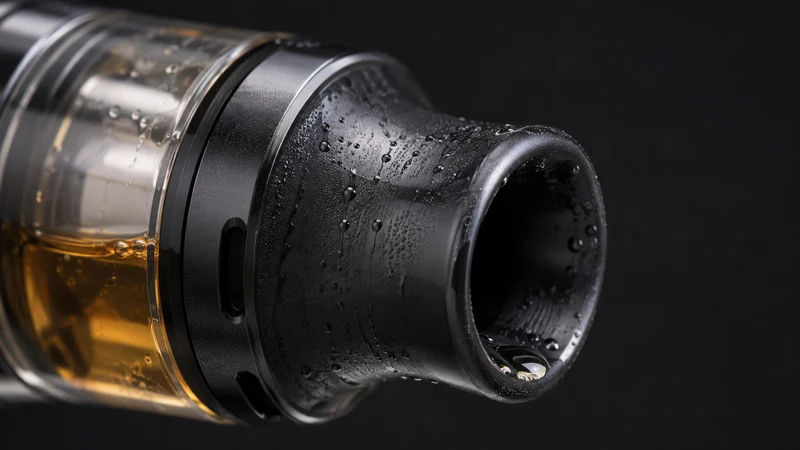
1. Why does e-liquid rise into the mouth?
In an e-cigarette, the e-liquid is absorbed by a wick, usually made of cotton, and then heated by the coil to form an aerosol.
When there is too much liquid in the heating area, some of it may rise into the air channel instead of being vaporised.
This phenomenon is sometimes called spitback, particularly when it causes hot droplets to be projected upwards.
However, three situations must be distinguished:
- Cold droplets resulting from condensation.
- Liquid rising due to a flooded coil.
- Hot droplets projected from the coil.
These symptoms help guide the diagnosis, but do not always immediately identify the exact cause.
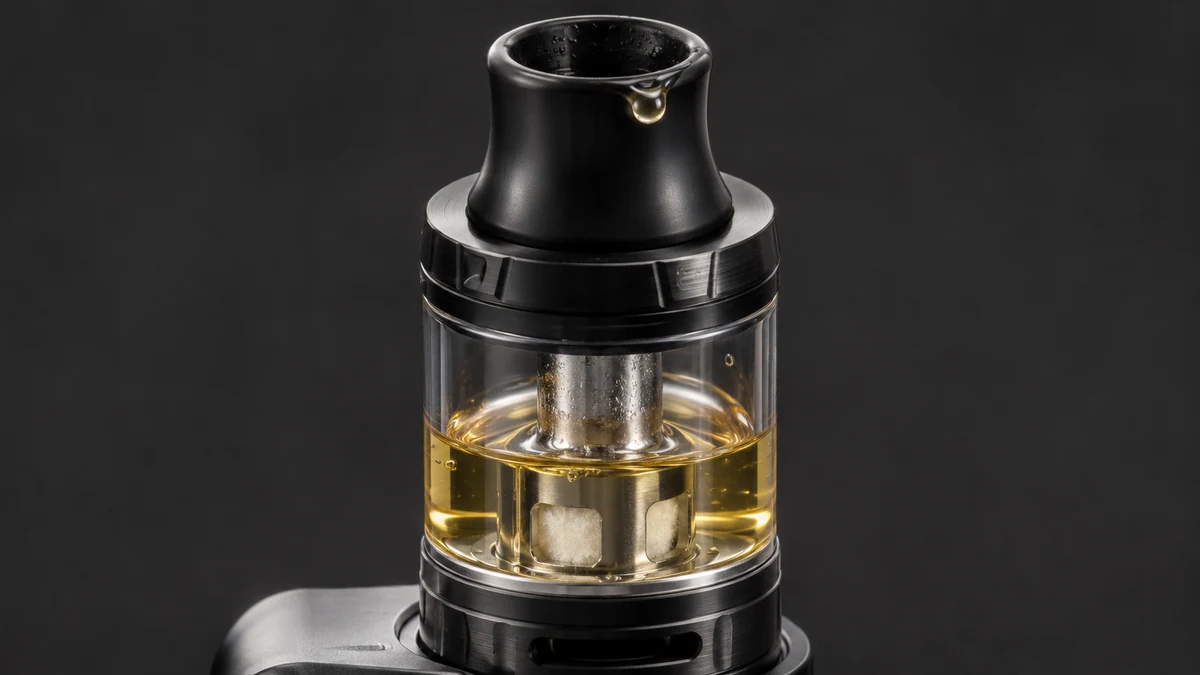
2. Condensation in the mouthpiece
Some of the aerosol may condense when it comes into contact with the cooler walls of the mouthpiece or clearomiser chimney.
Small droplets gradually accumulate in the channel. They may then reach the lips or mouth when you draw on the device.
This can occur particularly after a period of use or when the device has been left unused for several hours.
What should you check?
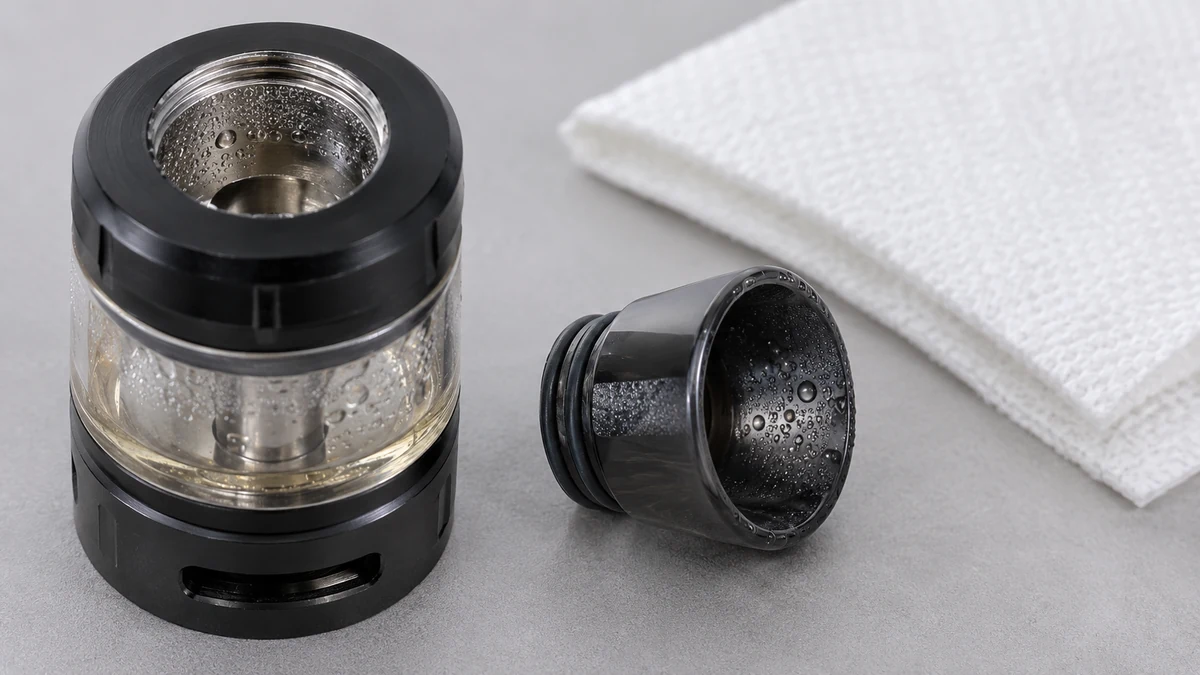
Switch off your e-cigarette if the model allows it, then remove the mouthpiece if it is detachable.
Wipe accessible traces of liquid with clean absorbent paper. Clean the mouthpiece according to the manufacturer's instructions and allow it to dry completely before putting it back in place.
Avoid inserting sharp objects into the channel.
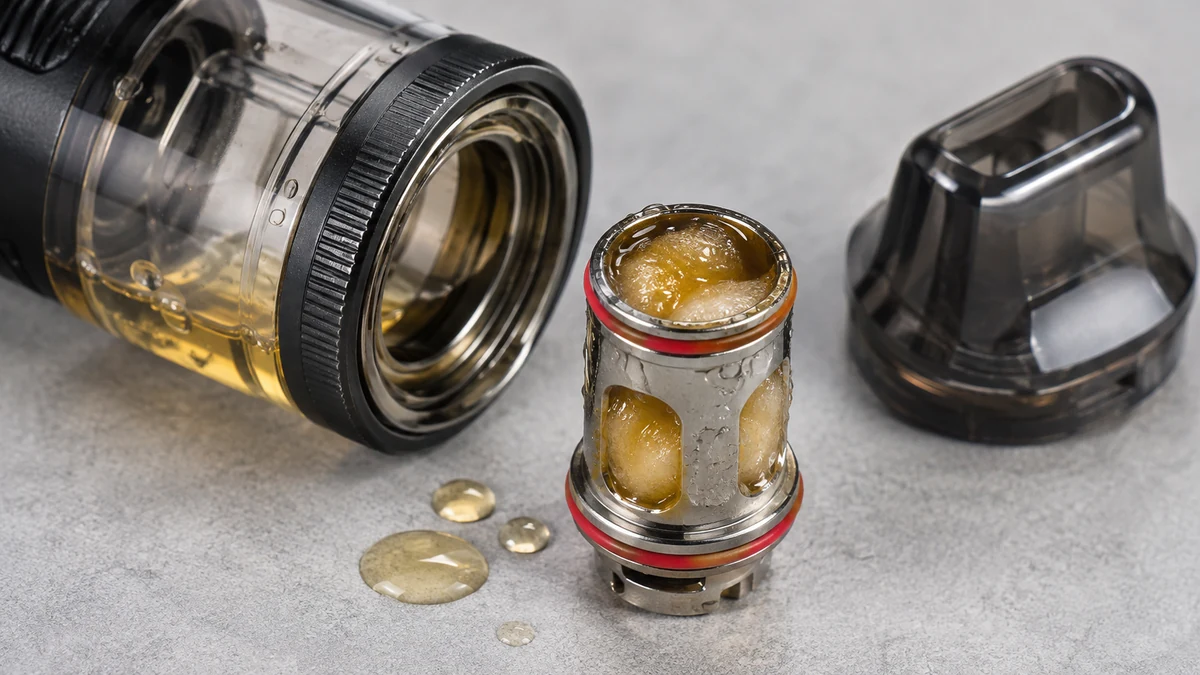
3. A coil saturated with too much e-liquid
A flooded coil contains more liquid than the vaporisation system can process properly.
Several symptoms may accompany flooding:
- A gurgling sound when drawing on the device.
- Droplets in the mouthpiece.
- Hot liquid droplets.
- Irregular vapour production.
- Liquid around the air inlets.
Flooding may occur after refilling, excessive coil priming or a long period without use.
Stop using the device and remove the tank or cartridge according to the manufacturer's instructions. Gently remove accessible excess liquid without pushing it towards the electronic components.
If the problem persists, the coil or cartridge may need replacing.
4. Unsuitable heating power
On an e-cigarette with adjustable power, the coil generally has an operating range recommended by its manufacturer.
Power that is too low may encourage liquid to accumulate in the coil when it arrives faster than it is vaporised.
Conversely, increasing the power excessively may cause overheating or damage the cotton.
It is therefore important to check the markings on the coil or the device's instructions.
Never exceed the recommended power range in an attempt to eliminate liquid projections.
To better understand these markings, consult our guide on choosing e-cigarette coils.
5. Drawing too hard
Drawing too hard on certain devices may cause an excessive supply of liquid to the coil.
This depends in particular on the design of the tank, the coil and the air supply system, also called airflow.
When liquid consistently rises while you draw on the device, check that the air openings are not obstructed and that the adjustment matches the manufacturer's recommendations.
Do not try to compensate for restricted airflow by drawing harder.
Our article on e-cigarettes that are hard to draw on sets out the main checks relating to this problem.
6. E-liquid that is too thin for the coil
The PG/VG ratio affects the viscosity of e-liquid.
Propylene glycol (PG) is generally thinner than vegetable glycerine (VG).
A liquid that is too thin for a coil's liquid feed openings may encourage excessive saturation of the cotton and flooding.
However, a thicker liquid is not always the solution. Excessive viscosity may also lead to an inadequate liquid supply in certain coils.
It is therefore advisable to follow the manufacturer's compatibility recommendations rather than choose a PG/VG ratio solely to stop liquid rising into the mouthpiece.
7. A filling or sealing problem
Liquid may also rise into the mouthpiece immediately after filling the tank.
The main causes to examine are:
- Overfilling the tank.
- Liquid accidentally introduced into the central chimney.
- A filling cap that is not properly closed.
- An incorrectly installed coil.
- A displaced or damaged seal.
- A cracked cartridge.
If you also notice liquid leaking outside the tank, consult our article on e-cigarette leaks and their causes.
8. Why does my pod spit liquid into my mouth?
Pods generally have a compact cartridge with an air channel located close to the coil.
A build-up of condensation or a sealing fault can therefore cause liquid to rise into the mouthpiece.
On a pod with a built-in coil, a faulty cartridge generally needs to be replaced in its entirety.
Remove the cartridge and also check the accessible contacts. If liquid has entered the electronics, stop using and charging the device until it has been checked.
9. What should you do if e-liquid enters your mouth?
E-liquid is not intended to be swallowed. If it contains nicotine, swallowing it may pose a risk of poisoning.
If liquid comes into contact with your mouth:
- Stop using the device immediately.
- Spit out the liquid.
- Rinse your mouth thoroughly with water, then spit it out.
- Do not try to induce vomiting.
If nicotine-containing liquid or an unknown quantity has been swallowed, or if symptoms such as nausea, dizziness or palpitations occur, contact a poison control centre promptly.
If serious symptoms occur, particularly breathing difficulties or loss of consciousness, call 15 or 112 (in France).
Keep the bottle or its label so that you can provide details of its composition and nicotine concentration.
Frequently asked questions
A build-up of condensation may explain a few droplets. However, repeated liquid rising into the mouthpiece requires the device to be checked.
A flooded coil may cause heated droplets to be projected upwards. Stop using the device and identify the cause of flooding.
Overfilling, liquid introduced into the air channel or a closure fault may explain this phenomenon.
Yes. Excessive priming, incorrect installation or a defective coil may be responsible, even when the part is new.
Not necessarily. Condensation, filling and the installation of components should be checked first. If the coil is damaged or the problem persists, replacement may be necessary.
Conclusion
E-liquid rising into the mouth may have several causes. Examining the mouthpiece, air channel, coil and tank seals generally helps guide the diagnosis.
If liquid projections persist despite these checks, stop using the device and have it checked.
E-cigarettes are not risk-free. Nicotine is an addictive substance.