
Post author: Royalcig
Publication date: 21/11/2026
An electronic pipe , also known as an e-pipe , can work with different types of e-liquid. Contrary to a common belief, there is no composition exclusively reserved for these devices.
An electronic pipe, also known as an e-pipe, can work with different types of e-liquid. Contrary to a common belief, there is no composition exclusively reserved for these devices.
To determine which e-liquid is suitable for an electronic pipe, three elements need to be examined: the clearomiser or atomiser fitted, the coil used and the liquid's PG/VG ratio.
A handmade Créavap e-pipe and a Kamry K1000 Plus do not necessarily have the same vapour-producing system. The choice of liquid must therefore take account of the exact hardware, not simply the shape of the pipe.
Why does the choice of e-liquid depend on the clearomiser?
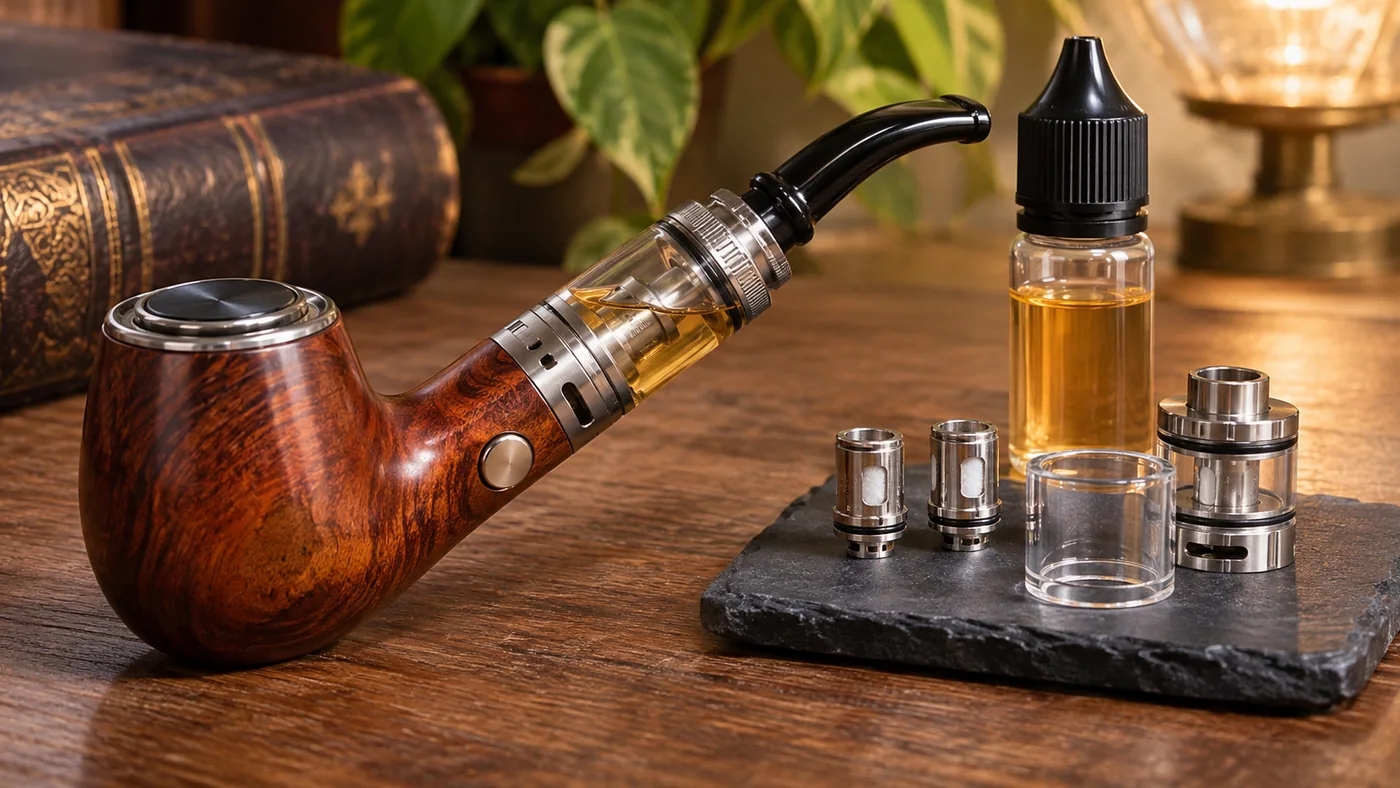
The clearomiser is the part of the electronic pipe that contains the tank and the coil. The latter heats the liquid, which is supplied through an absorbent material generally made of cotton.
Each system has its own characteristics: wicking openings, airflow, resistance and power range.
A liquid that is too viscous for a coil's wicking system can lead to insufficient saturation of the cotton. Conversely, a liquid that is too thin for certain configurations may encourage leaks.
Compatibility therefore depends on the entire vapour-producing system.
Before filling an e-pipe, it is necessary to identify the clearomiser model and the exact coil reference. This information is generally found on the packaging, on the coil or in the manufacturer's documentation.
Understanding the PG/VG ratio of an e-liquid for an e-pipe
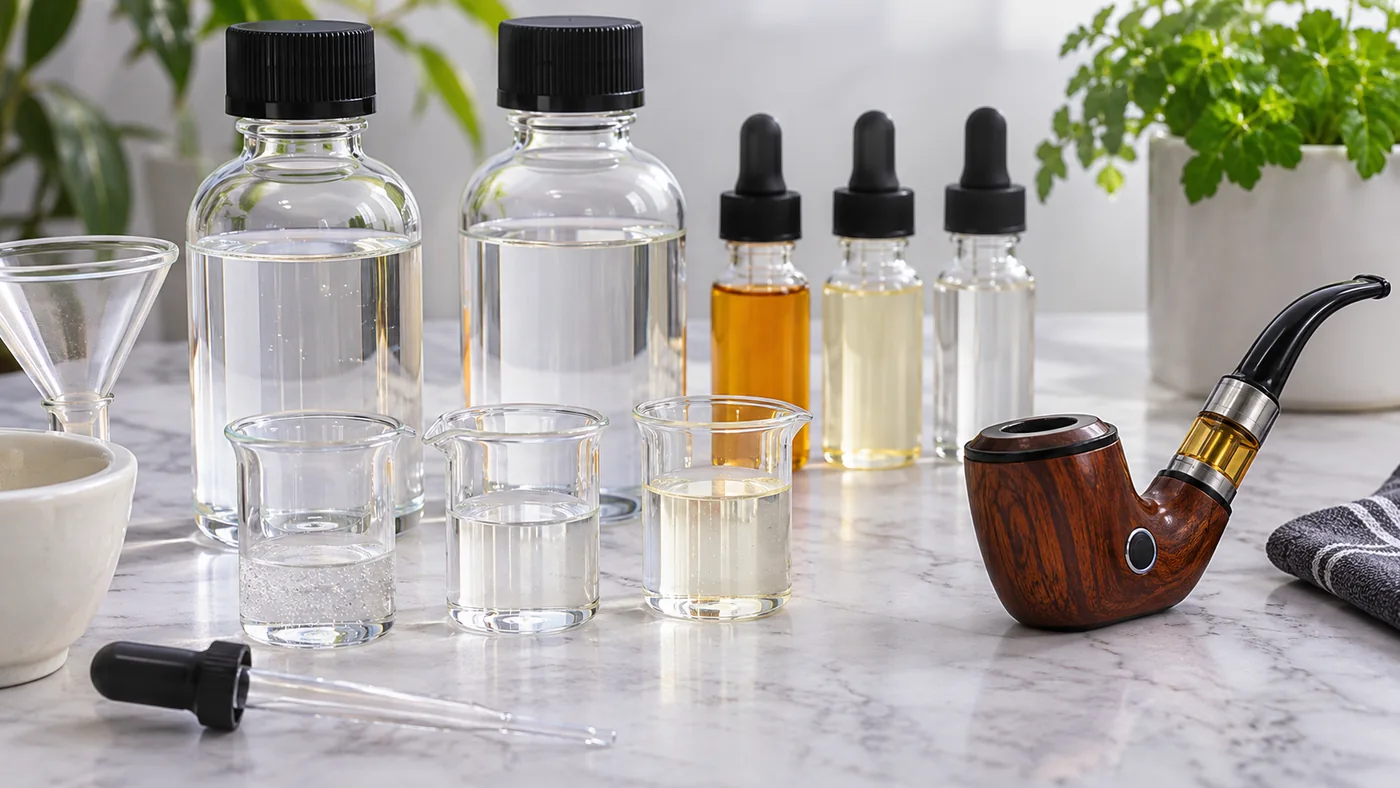
The PG/VG ratio refers to the proportions of propylene glycol (PG) and vegetable glycerine (VG) that make up an e-liquid.
PG is less viscous than VG. Among other things, it helps carry flavours and contributes to the sensations felt during inhalation.
VG has a thicker consistency and plays a role in aerosol production.
The more VG a liquid contains, the more viscous it generally is, which can affect how it moves through the coil's cotton.
Is a 50/50 PG/VG e-liquid suitable?
A 50/50 PG/VG liquid contains balanced proportions of PG and VG. This composition is frequently used in clearomisers intended for mouth-to-lung inhalation, known as MTL.
It is a common reference point, particularly with certain Innokin tanks, but it is not universally suited to every configuration.
Can a 30/70 PG/VG e-liquid be used?
A liquid containing 30% PG and 70% VG is more viscous than a 50/50 liquid.
Some atomisers and clearomisers are designed to work with this type of composition. This is particularly the case with compatible Innokin systems, provided the manufacturer's stated conditions are followed.
It would therefore be incorrect to claim that high-VG e-liquids are systematically incompatible with electronic pipes.
Which e-liquid should you use with a Créavap electronic pipe?
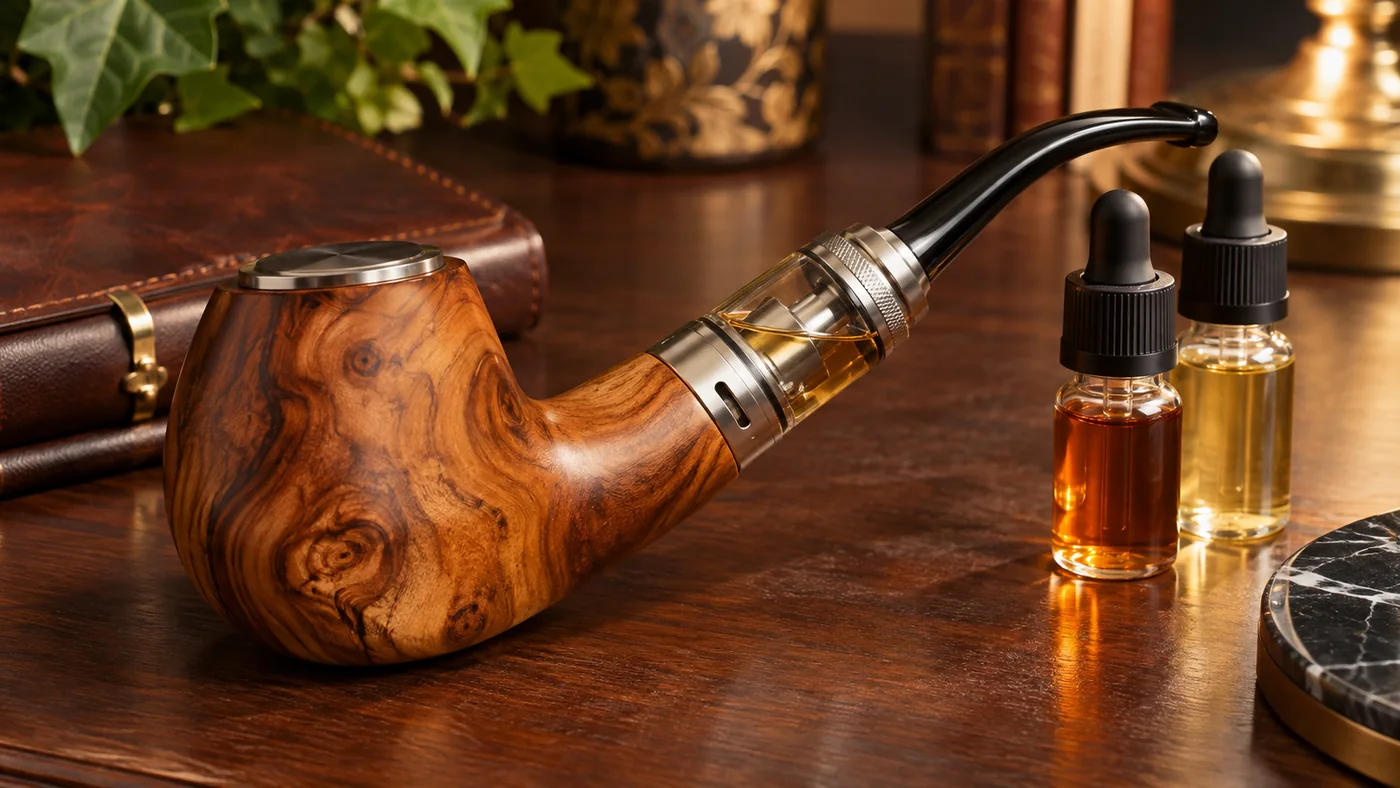
Créavap electronic pipes include the Bent, Billiard, Dublin and Gandalf DNA 60 models, among others.
These e-pipes may be offered with different configurations. Some are paired with an Innokin Zlide D22 clearomiser, while others can accommodate a compatible atomiser.
The choice of liquid does not depend directly on the wood species, the shape of the bowl or the model name.
With an Innokin Zlide D22 clearomiser
The Zlide D22 is mainly intended for mouth-to-lung inhalation (MTL). It uses coils from the Innokin Z-Coil family.
According to Innokin's information, this clearomiser can work with 50/50 PG/VG compositions as well as certain liquids with a higher VG content.
Nevertheless, the fitted coil, its power range and the recommendations applicable to that configuration must be checked.
With an Ares Finale rebuildable atomiser
The Innokin Ares Finale is a rebuildable atomiser mainly intended for mouth-to-lung inhalation.
The manufacturer states compatibility with 50/50 and 30/70 PG/VG liquids. However, the result depends on the build, the amount of cotton and the coil that has been made.
A rebuildable configuration requires its electrical characteristics and liquid supply to be checked.
With a mechanical e-pipe
On a mechanically operated electronic pipe, electrical compatibility is particularly important.
The fitted coil must be suitable for the device and the battery cell used. The battery cell format, such as 18350 or 18650, is not enough to determine the permitted operating conditions.
The manufacturer's limits must be respected, and a build whose electrical safety has not been established must not be used.
For the differences between models, see the complete RoyalCig guide to electronic pipes.
Which e-liquid should you use with a Kamry K1000 Plus?
The Kamry K1000 Plus is an electronic pipe with a built-in battery and a specific clearomiser.
It should not be regarded as technically identical to a Créavap e-pipe fitted with a Zlide.
The choice of liquid must follow the recommendations for the Kamry clearomiser and coils being used.
In particular, the coil reference, liquid supply and instructions in the manual for the relevant version should be checked.
The presence of a built-in battery does not, by itself, determine the compatible PG/VG ratio.
Which coil should you use with an e-liquid for an electronic pipe?
A coil's resistance value is expressed in ohms (Ω). It forms part of the electrical characteristics of the vapour-producing system.
Coils intended for mouth-to-lung inhalation often have relatively high resistance values, but this is not an absolute rule.
Two coils with the same resistance in ohms can have different designs: material, heating surface, liquid supply and recommended power.
The ideal PG/VG ratio therefore cannot be determined from the number of ohms alone.
The most reliable method is to check:
- The exact reference of the clearomiser or atomiser.
- The model of the fitted coil.
- The manufacturer's specified power range.
- Compatible PG/VG ratios.
- Any electrical limits of the e-pipe.
For more on these points, see our guide to choosing an electronic cigarette coil.
How can you recognise an e-liquid that is poorly suited to your e-pipe?
Several symptoms can indicate a problem with liquid supply or coil operation.
A burnt taste
A burnt taste can occur when the cotton is not sufficiently saturated or when the coil is operating under unsuitable conditions.
A liquid that is too viscous for the system can contribute to this problem. Excessive power or a worn-out coil may also be responsible.
If a burnt taste persists, stop using the device and check the coil.
Liquid leaks
A leak may be caused by an unsuitable liquid, but also by a damaged seal, an incorrectly fitted coil or a tank that has not been closed properly.
It should therefore not automatically be assumed that a PG/VG ratio is responsible for a leak.
Irregular aerosol production
Irregular production may be linked to the condition of the coil, its liquid supply, the electrical contact or the device's state of charge.
These symptoms should be examined separately before changing the liquid's composition.
Is a tobacco flavour compulsory in an electronic pipe?
No. An electronic pipe can work with different flavour families, provided their composition is compatible with its vapour-producing system.
Recipes described as classic, inspired by light or dark tobacco flavour profiles, have historically been associated with the world of pipes. However, fruit, menthol or dessert flavours are not technically excluded.
Choosing a flavour family does not change the device's electrical limits.
Some very sweet liquids can cause a coil or its cotton to become coated with residue more quickly. However, replacement frequency depends on the formulation and conditions of use.
The various liquid families are presented in the RoyalCig electronic pipe e-liquids category.
Checks to make before filling an e-pipe
Before any use, it is important to check the compatibility of the liquid and equipment.
In particular, check the coil reference, its installation, the PG/VG recommendations and the tank's fill level.
When a new coil is fitted, follow the priming procedure specified by its manufacturer. Insufficient saturation of the cotton can quickly damage the coil.
On a device with adjustable power, respect the range specified for the coil. On a mechanical e-pipe, do not attempt to compensate for a liquid supply problem by changing the build without understanding its electrical characteristics.
Finally, keep e-liquids out of children's reach and follow the precautions shown on their packaging.
FAQ: e-liquid and electronic pipes
Which PG/VG ratio should you choose for an electronic pipe?
The ratio depends on the clearomiser, atomiser and coil used. A 50/50 PG/VG ratio is common in certain MTL systems, but higher-VG compositions may also be compatible depending on the equipment.
Can you use an e-liquid containing 70% VG in an e-pipe?
Yes, in certain compatible configurations. Innokin states, in particular, that Zlide clearomisers and Ares Finale atomisers can work with liquids containing 70% VG, provided their conditions of use are followed.
Do you need a special e-liquid for a Créavap?
No. A Créavap does not, by itself, require a specific composition. The choice depends mainly on the fitted clearomiser or atomiser and the electrical characteristics of the complete set-up.
Can you put any e-liquid in a Kamry K1000 Plus?
No. The liquid's compatibility with the clearomiser and coils intended for the K1000 Plus must be checked. The pipe's shape and built-in battery do not establish that compatibility.
Why does my electronic pipe taste burnt?
A burnt taste may be caused by a worn-out coil, insufficiently saturated cotton, liquid that is too viscous for the system or unsuitable electrical operating conditions. Stop using the device and identify the cause before resuming.