
Post author: Royalcig
Publication date: 21/11/2026
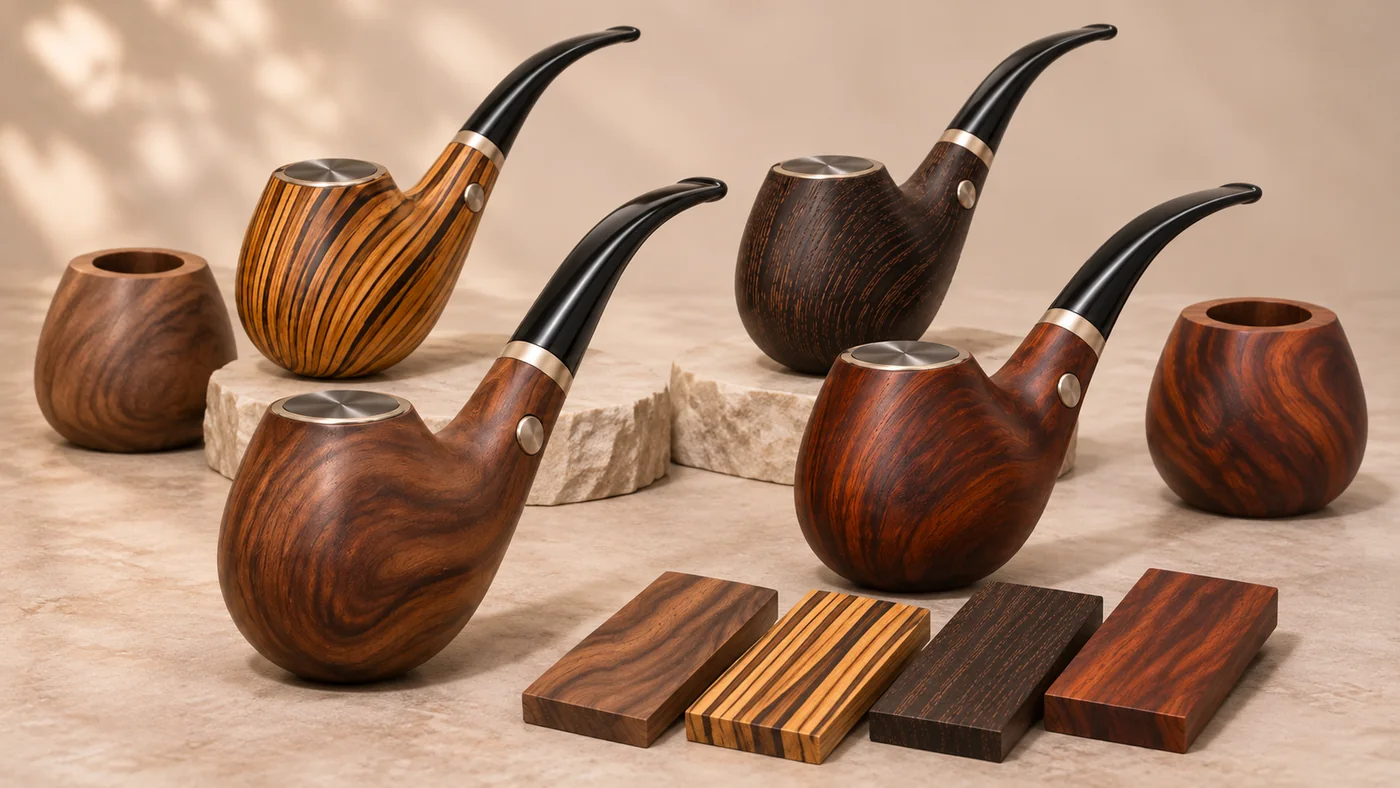
A wooden electronic pipe stands out for both its shape and the material used for its body. Créavap's handcrafted e-pipes are offered in several woods, depending on the model: walnut, zebrano, wenge and rosewood. Their appearances differ, but it would be misleading to claim that one wood produces better vapour than another.
A wooden electronic pipe stands out for both its shape and the material used for its body. Créavap's handcrafted e-pipes are offered in several woods, depending on the model: walnut, zebrano, wenge and rosewood. Their appearances differ, but it would be misleading to claim that one wood produces better vapour than another.
This guide compares their appearance, explains natural variation and distinguishes the choice of wood from the device's technical characteristics.
Why does the wood affect an e-pipe's appearance?
A type of wood refers to material obtained from a tree or a group of trees. Every piece has its own pattern: growth rings, the direction of the cut, fibres and occasional irregularities influence the grain. Colour also depends on the finish.
Two handcrafted e-pipes made from the same wood can display different lines and shades, particularly when the bowl is turned from a solid piece of timber.
Walnut: brown tones and varied grain
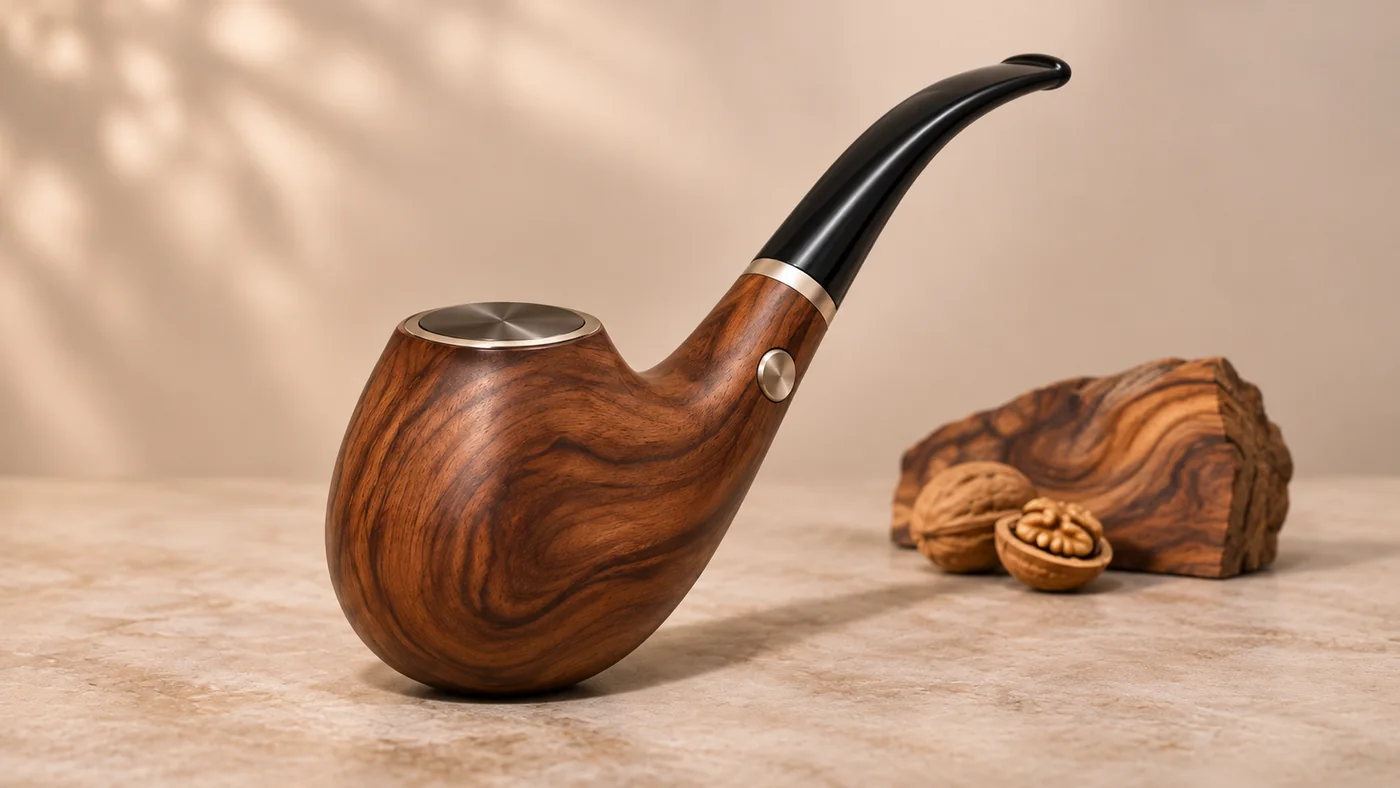
Walnut usually shows brown tones that may be lighter or deeper depending on the individual piece. Its grain can be relatively subtle or form flowing, wavy patterns. Its appearance cannot be reduced to a single uniform shade of brown.
On an electronic pipe, this wood often has an understated appearance. The grain remains natural, however, and can be particularly expressive in parts of the bowl. Warm lighting may emphasise its amber tones.
Zebrano: highly contrasting stripes
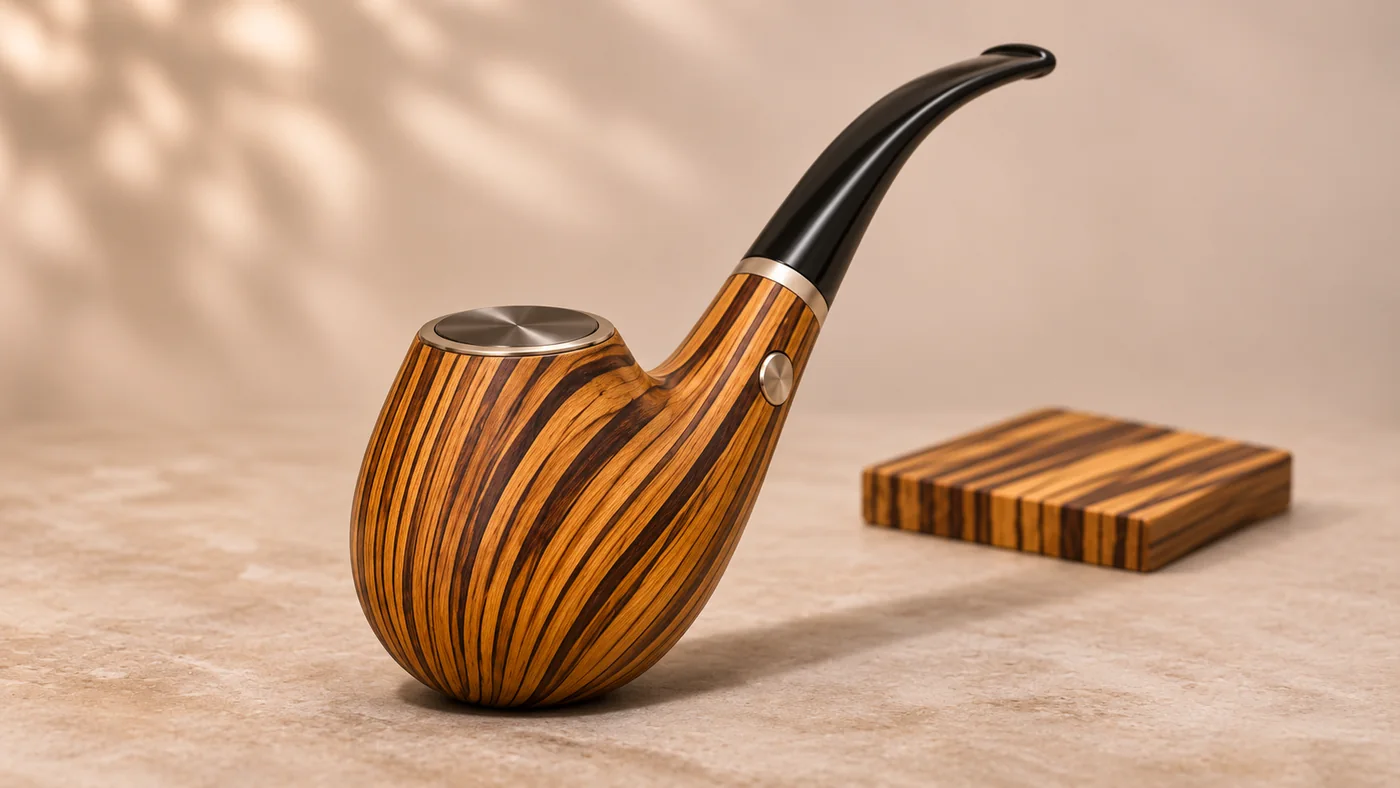
Zebrano is often recognised by its light background, ranging from beige to golden brown, crossed by darker streaks. These lines can look parallel on one side and more curved on another: their direction depends on how the timber was cut and the shape of the pipe.
It is a wood whose contrast is often immediately apparent in photographs. The stripes differ between individual pieces. Slightly lighter zebrano does not, by itself, indicate better or worse quality.
Wenge: dark tones and distinctive texture
Wenge is generally associated with very dark brown shades that can appear almost black, with fine, lighter lines. Unlike zebrano, its contrast is often expressed through more subtle shades, especially in soft lighting.
On an e-pipe, the finish and lighting can make wenge appear lighter or darker. A very dark photograph does not represent every piece. The grain remains visible and varies naturally.
Rosewood: warm, sometimes reddish shades
The term rosewood is used in pipe ranges to describe a wood with a generally warm appearance, often brown with reddish hues. On Créavap models sold under this name, the colour can vary between individual pieces and the grain pattern remains natural.
Do not assume a precise botanical identification from the word ‘rosewood’ alone: this commercial name can refer to different timbers in different contexts. Only the manufacturer can confirm the exact species and origin of a particular piece.
Quick comparison: walnut, zebrano, wenge and rosewood
The descriptions below represent typical visual tendencies, not guarantees for every handcrafted item.
| Wood | Usually observed colour | Characteristic grain |
|---|---|---|
| Walnut | Light to deep brown | Variable shades and curved lines |
| Zebrano | Golden beige to brown | Often strongly contrasting dark stripes |
| Wenge | Very dark brown | Dark grain with fine streaks |
| Rosewood | Warm brown, sometimes reddish | Patterns and shades vary between pieces |
The finish, lighting and camera settings all affect how colours appear. Where possible, compare photographs taken under similar conditions.
Does the choice of wood change an electronic pipe's performance?
The wooden body primarily affects the device's shape and appearance. The type of wood should not be confused with its battery, connector, firing button or internal electronics. Those components depend on the particular model and its design, not simply on whether walnut or zebrano was chosen.
Likewise, flavour and aerosol production depend on factors including the e-liquid, coil, atomiser and available settings. The wood of the bowl is not a flavouring and is not, by itself, a measure of performance. Technical characteristics must therefore be checked separately.
Which wood should you choose for each e-pipe shape?
Créavap's handcrafted models include the Billiard and Bent in 18350 format, the Dublin in 18650 format and the Gandalf DNA 60 with regulated electronics. Depending on the version and availability, the same shape may be offered in several types of wood.
A straightforward approach has two stages: first check the format, compatible battery, operating method and intended atomiser; then examine the wood's colour and grain. The same wood can look different depending on the bowl shape and the direction of its fibres.
For details of the different designs, read our guide to how electronic pipes work. The models' characteristics are also presented in the RoyalCig e-pipes section.
How can you preserve the wood's appearance over time?
Whatever the wood, natural timber can react to changes in humidity, knocks and extreme temperatures. The finish also affects how it looks over time. Avoid immersing the pipe body, exposing it to strong heat sources or using harsh cleaning products.
There is no universal treatment that can be applied without precautions: oiling, waxing or sanding an e-pipe may alter its finish or affect technical components. Always follow the manufacturer's instructions before attempting any treatment. For more detailed precautions, see our guide to humidity and wooden e-pipe care (in French).
FAQ: wood types used in electronic pipes
What is the difference between zebrano and wenge?
Zebrano is often lighter, with strongly contrasting dark stripes. Wenge is generally much darker and has more subtle streaks. These are general tendencies because every piece of wood is different.
Is walnut better than rosewood for an e-pipe?
Neither can be said to be generally superior based on the wood alone. Visible differences mainly concern colour and grain. Manufacturing quality, finish and technical components need to be assessed separately.
Can two walnut Créavap pipes have different colours?
Yes. The wood's colour, fibres and patterns vary naturally. The way the timber block was cut, the finish and the lighting used for photographs can also emphasise apparent differences.
Does the wood change the taste of an e-liquid?
No, not simply because that wood is used for the e-pipe body. Flavour primarily depends on the liquid, atomiser, coil and conditions of use.
Can a wooden electronic pipe be cleaned with water?
Neither the wooden body nor electrical components should be immersed in water. Care must follow the manufacturer's instructions and be kept separate from cleaning the clearomiser or atomiser, depending on the part concerned.