

Post author: Royalcig
Publication date: 21/11/2026
An electronic pipe has a distinctive shape, often featuring a wooden body, a firing button and a long mouthpiece. This design calls for certain precautions when you want to carry it in a shoulder bag, bag or case.
An electronic pipe has a distinctive shape, often featuring a wooden body, a firing button and a long mouthpiece. This design calls for certain precautions when you want to carry it in a shoulder bag, bag or case.
On several mechanical models, including certain Créavap e-pipes, the firing button does not have a locking mechanism.
Accidentally pressing this button can therefore activate the coil if a battery is installed in the pipe.
How can you prevent accidental firing? Should you remove the battery? What are the differences between a mechanical Créavap pipe and a Kamry with a built-in battery? Here are the essential precautions.
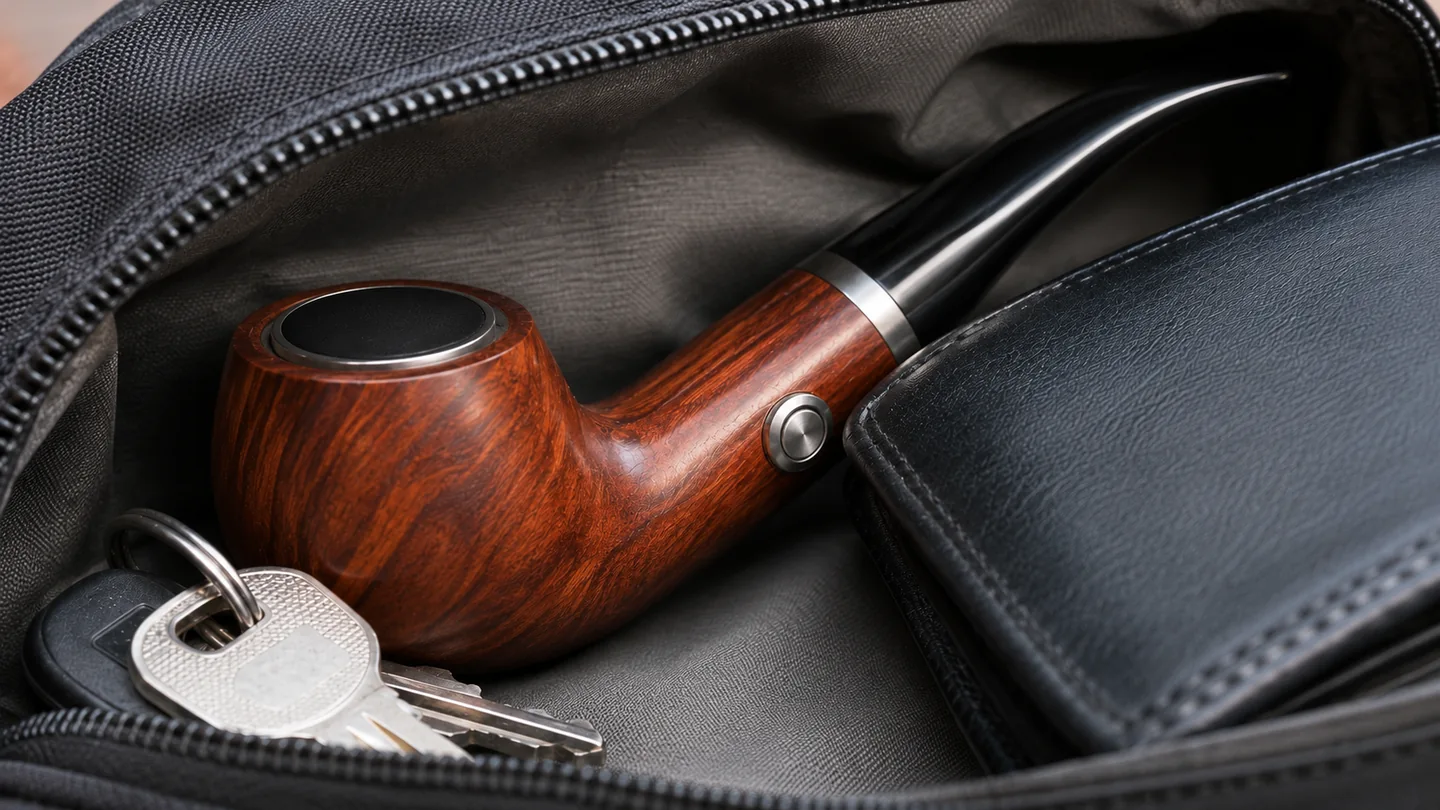
1. Why can an electronic pipe activate accidentally?
An electronic pipe operates using an electrical power source that supplies energy to a coil.
On some models, it is activated by pressing a button known as the switch.
When the pipe is stored in a bag or carried alongside other objects, that button may be pressed unintentionally.
If the system has no locking mechanism and the battery is installed, the coil may receive power without the user intending it.
Prolonged activation can cause a significant rise in temperature and damage certain components.
The transport precautions must therefore take account of the firing system specific to each model.
A pouch or carrying bag is not necessarily enough to prevent a non-locking button from being activated.

2. What is the difference between a mechanical e-pipe and a regulated electronic pipe?
Not all electronic pipes work in the same way.
A mechanical electronic pipe
A mechanical e-pipe generally uses a removable battery and a contact system operated by the switch.
Depending on its design, it may not have an electronic circuit to regulate power or provide certain protections.
Operation therefore depends directly on the battery, the electrical assembly and the coil being used.
A mechanical button without a lock consequently presents a particular risk if it is pressed accidentally during transport.
A regulated electronic pipe
Some models include electronic controls that allow the device to be switched on or off, among other functions.
However, having an electronic circuit does not guarantee that every possible accidental activation is prevented.
Always check the locking options and the manufacturer's instructions.
To understand these differences, see our complete guide to how electronic pipes work.
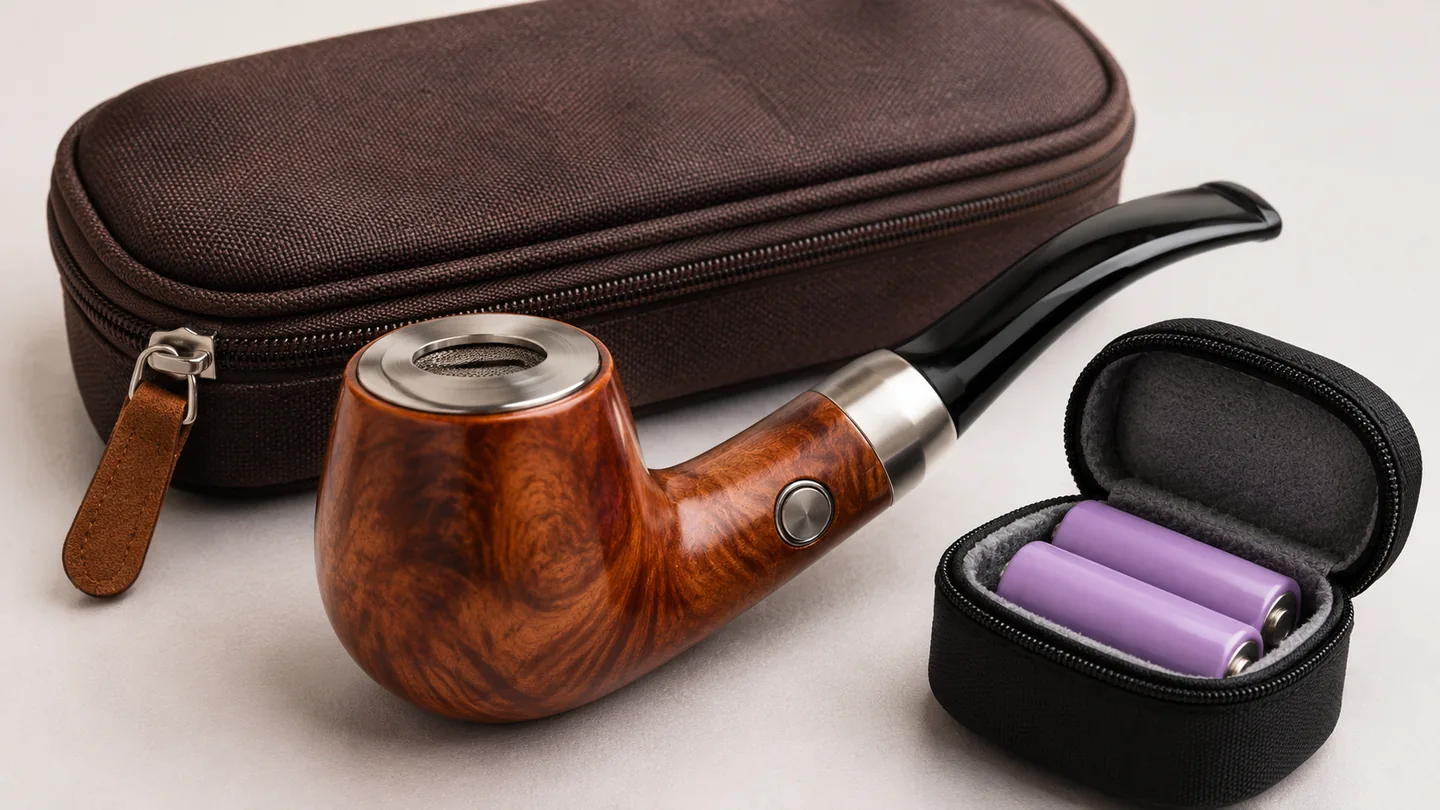
3. Why remove the battery from a Créavap e-pipe during transport?
Certain Créavap pipes, particularly some Bent and Dublin versions, have a mechanical switch that cannot be locked.
The instructions for these models recommend removing the battery during transport.
This precaution prevents a simple press of the button from supplying power to the coil.
Depending on the model, the batteries used may have different sizes, particularly 18350 or 18650.
Do not assume that every Créavap e-pipe has the same firing mechanism.
Before transporting the pipe, consult the exact documentation for your version.
When a manufacturer recommends removing the battery, this instruction must be followed even when the pipe is stored in a case.
Do not attempt to jam the switch with an object or modify its mechanism to lock it.
4. How should you carry a separate 18350 or 18650 battery?
A removable lithium-ion battery must be protected against short circuits and physical damage.
Its metal terminals must not come into contact with keys, coins or other conductive objects.
For transport:
- Use an insulating case specifically suited to the battery's size.
- Place each battery in an appropriate individual compartment.
- Check that its insulating wrap has no tears.
- Avoid knocks and excessive pressure.
- Never carry a loose battery in a pocket or bag.
- Follow the manufacturer's storage and transport instructions.
You should also avoid using or charging a battery that shows signs of deformation, unusual heat or visible damage.
Removing and reinserting the battery must be done according to the pipe's instructions, particularly to ensure correct polarity.
Do not handle an unusually hot battery or device unnecessarily.
5. How can you protect an e-pipe's body and button when travelling?
The shape of an electronic pipe can expose some components to pressure or knocks.
Particular care is needed around the button, clearomiser, connector and long mouthpiece.
Suitable storage should notably prevent:
- Constant pressure on the switch.
- Knocks against hard objects.
- Mechanical strain on the mouthpiece.
- E-liquid leaks reaching electrical connections.
- Prolonged exposure to moisture or heat.
Where the design allows, certain accessories can be removed for storage in accordance with the instructions.
However, do not force components apart or dismantle electrical parts.
For models made of natural wood, storage precautions complement those aimed at preventing accidental activation.
Our article Wooden electronic pipe: how can you prevent moisture damage? explains these points in detail.
6. How should you transport a Kamry K1000 Plus with a built-in battery?
The Kamry K1000 Plus works differently from a mechanical e-pipe with a removable battery.
It has a built-in battery and an electronic firing button.
Its documentation states that five consecutive presses of the button are used to turn the device on or off.
Before storing it, use the shutdown procedure specified for the model and check that the device really is deactivated.
The built-in battery is not designed to be removed by the user.
Never open the body of a Kamry K1000 Plus to try to disconnect its battery before travelling.
If the button behaves abnormally or the pipe activates without anyone deliberately operating it, stop using it and have the equipment checked.
The exact procedure for transport must always follow the instructions for the relevant version.
7. Can you carry an electronic pipe in a car or on a plane?
Travel conditions can also affect the precautions you need to take.
In a car
An electronic pipe must not be left exposed to high temperatures, especially on a dashboard in the sun.
You should also avoid leaving it loose among other objects that might press its button or cause knocks.
Removable batteries must remain protected in suitable insulating cases.
On a plane
Air travel is subject to specific rules concerning electronic cigarettes and lithium-ion batteries.
In France, electronic cigarettes and spare lithium batteries must not be placed in checked baggage in the aircraft hold.
Carrying them in the cabin is subject to the applicable conditions.
Before departure, check the airline's requirements and the current restrictions, particularly regarding the number of batteries, their protection, and the prohibition on using or charging them on board.
Removing a battery where appropriate does not exempt you from following these rules.
8. What should you do if an electronic pipe's button gets stuck?
A button that stays depressed or does not return normally to its starting position can create a risk of accidental activation.
This may be caused by a mechanical problem, a build-up of dirt or deterioration.
If the button is not working normally:
- Stop using the pipe immediately.
- Do not try to force the mechanism.
- Do not attempt an improvised repair.
- Do not carry the device in a configuration that would allow it to activate.
- Have the system checked by the manufacturer or a qualified professional.
On a model with a removable battery, removing it may be necessary under the manufacturer's instructions, provided this can be done safely.
If the device becomes unusually hot, do not continue any risky handling.
A faulty switch must not be treated as a minor inconvenience.
Frequently asked questions about transporting electronic pipes
Do you always have to remove the battery from a Créavap electronic pipe?
It depends on the model and its firing system. On some mechanical Bent and Dublin versions with a non-locking switch, removing the battery during transport is recommended. The instructions for the specific model are authoritative.
Can you carry an 18350 battery loose in your pocket?
No. A removable battery must be placed in a suitable insulating case. Contact with keys, coins or other metal objects may cause a short circuit.
Can an electronic pipe switch itself on inside a bag?
Yes, if its button is pressed unintentionally and its firing system allows this to happen. The risk depends on the design and the protections fitted.
How do you switch off a Kamry K1000 Plus before putting it away?
The Kamry K1000 Plus documentation specifies five consecutive button presses. Check that the device has actually switched off and follow the instructions for your version.
Can you leave an electronic pipe in a car in the sun?
It is not advisable to leave an e-pipe or its batteries exposed to intense heat. High temperatures can affect the electrical components, battery, tank and materials used in the pipe's body.
Conclusion
Transporting an electronic pipe requires precautions suited to its operating system.
On certain mechanical Créavap e-pipes, the switch has no lock. Removing the battery is therefore an essential measure where specified by the manufacturer.
For electronic models with a built-in battery, such as the Kamry K1000 Plus, the appropriate shutdown procedure must be followed.
The main rule is to prevent any accidental activation, protect batteries against short circuits and follow the manufacturer's recommendations.
These precautions help reduce certain risks without guaranteeing that no incident can ever occur.
RoyalCig technical information article for adults. Vaping products are not risk-free. Nicotine is addictive. These products should not be used by non-smokers.