
Post author: Royalcig
Publication date: 18/11/2026
Small bubbles sometimes appear in an e-cigarette tank, next to the coil or at the bottom of a pod cartridge. Does this mean something is wrong? Should you intervene? In most cases, a few bubbles rising through e-liquid are normal. They are part of the exchange between air and liquid as the wick becomes saturated.
Small bubbles sometimes appear in an e-cigarette tank, next to the coil or at the bottom of a pod cartridge. Does this mean something is wrong? Should you intervene? In most cases, a few bubbles rising through e-liquid are normal. They are part of the exchange between air and liquid as the wick becomes saturated.
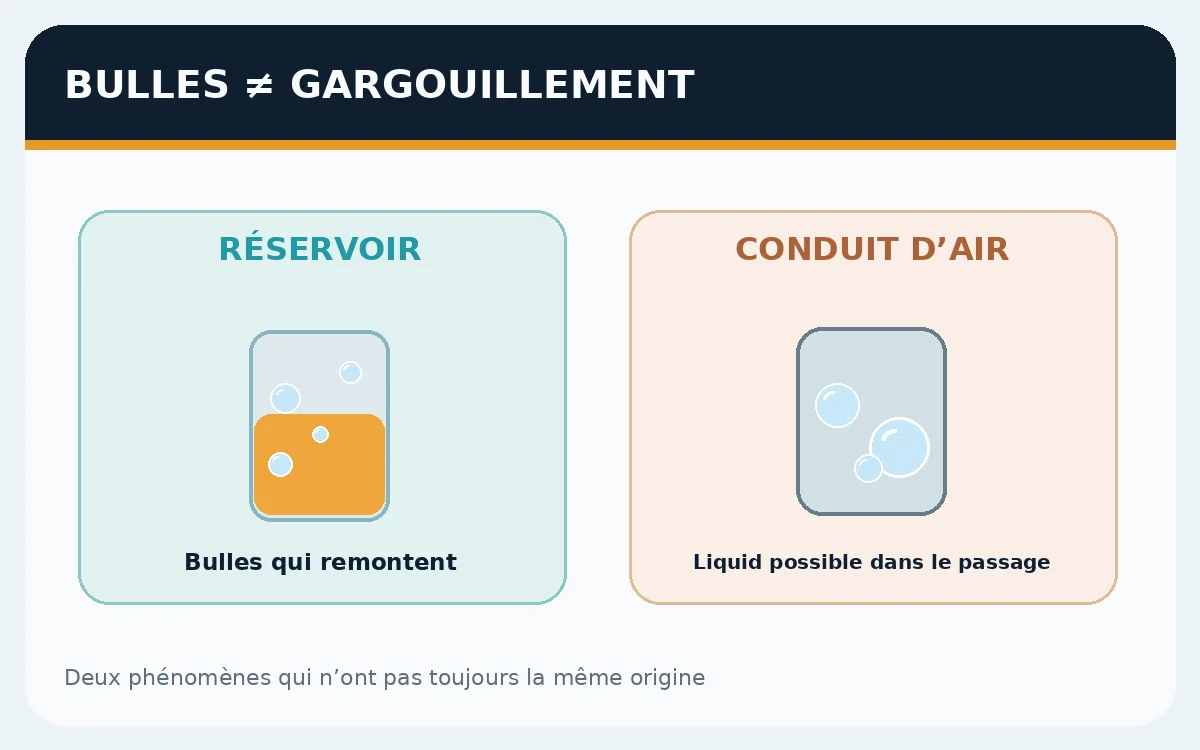
However, a large bubble that stays beside a liquid inlet, together with reduced aerosol production or a burnt taste, deserves investigation. It is also important to distinguish bubbles visible inside the tank from gurgling sounds in the airflow path: these can have different causes.
This guide explains what the signs mean and which simple checks can be carried out without making unsafe modifications or dismantling the device.
1. Why do air bubbles appear in a tank?
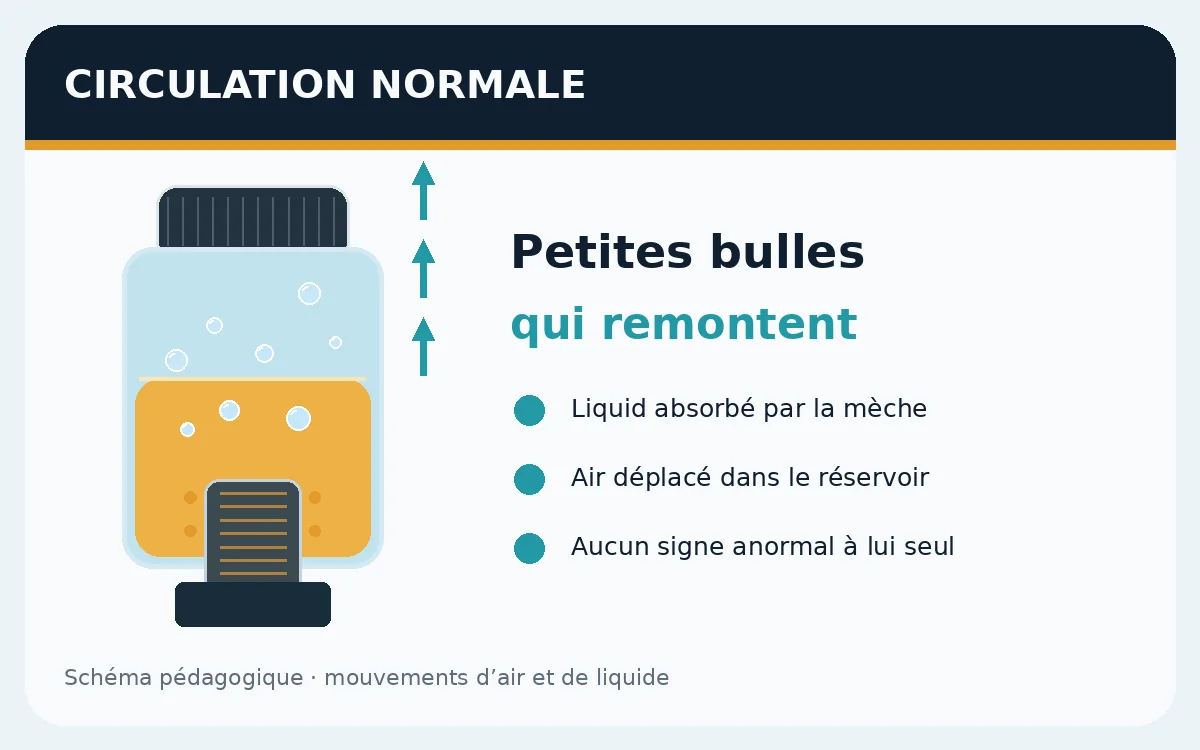
A coil unit contains a heating element and an absorbent material, often called a wick or cotton. E-liquid reaches that material through small openings and spreads by capillary action. As liquid fills spaces in the wick, some air can be displaced and rise through the tank as bubbles.
Bubbles may appear after refilling, while a new coil is priming, or after use. Their frequency depends on the tank design, the position of the liquid inlets and the liquid's viscosity. Bubbles alone are not proof of a fault.
Equally, a complete absence of visible bubbles does not necessarily mean the wick is being fed poorly: in some devices, airflow movements are simply difficult to see.
2. Normal bubble, trapped bubble or gurgling: how can you tell?
| What you notice | Possible explanation | Sensible response |
|---|---|---|
| A few small bubbles rise and disappear | Air exchange during wicking | No action if the device works normally |
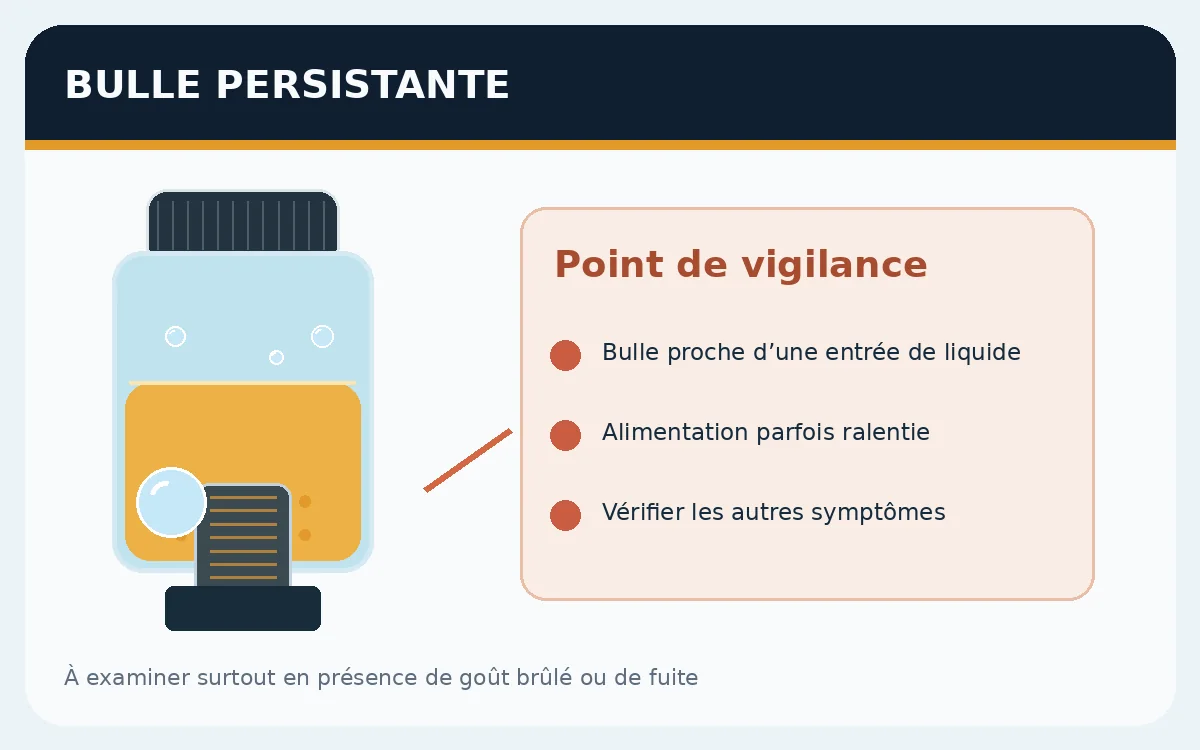
| A bubble stays close to a liquid inlet | Liquid movement may be locally restricted | Check level, positioning and instructions |
| Dry or burnt taste, less aerosol | Wick may be under-supplied or coil damaged | Stop using the device and find the cause |
| Gurgling and liquid in the mouthpiece | Excess liquid may be entering the airflow path | Check for leaks, filling issues and cartridge condition |
| Ongoing leak or cracked cartridge | Possible sealing problem | Do not use a damaged cartridge |
A bubble is therefore a clue, not a diagnosis. Unusual sensations, the condition of the equipment and repeated symptoms matter more than the size of a bubble alone.
3. Why can a bubble remain trapped near the coil?
Recent refilling
When a tank is filled, air may temporarily remain in a narrow area. E-liquid sometimes needs a little time to spread, particularly around the wicking openings.
Wick not yet saturated
A new cartridge or coil must be primed according to its instructions. Using it too soon can heat material that is insufficiently saturated and cause a burnt taste. Several manufacturers recommend waiting after filling: always follow the timing for your specific model.
Relatively thick e-liquid
Vegetable glycerine (VG) is more viscous than propylene glycol (PG). In some pods designed for thinner e-liquids, a high VG proportion can slow the replenishment of the wick. Cold conditions can also increase a mixture's viscosity.
Worn coil or damaged cartridge
Residue may accumulate during use, and the wick can deteriorate. A displaced seal, cracked cartridge or incorrectly seated component can also interfere with operation. However, a persistent bubble alone cannot identify a specific failure.
4. What should you do if e-liquid is not reaching the coil properly?
Stop using the device if you notice a burnt taste, unusual heat or a leak. Do not try to compensate by increasing the power or pulling much harder.
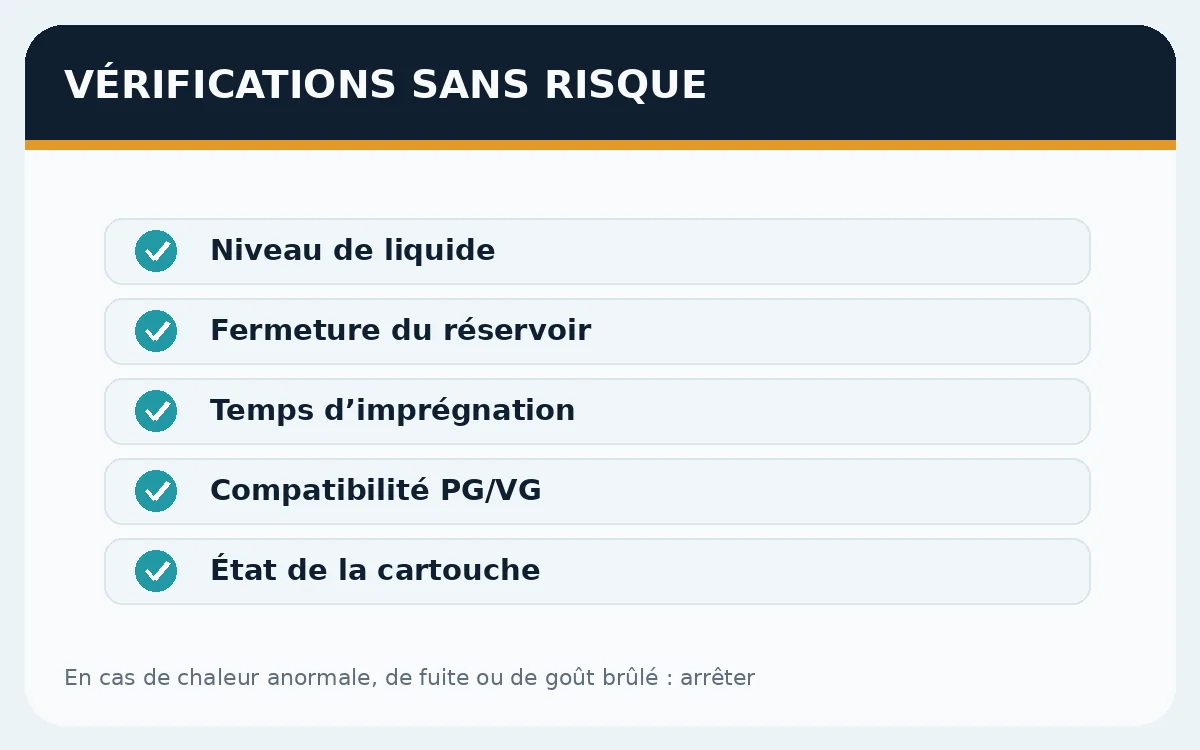
- Allow the device to cool, then inspect the tank in good light. Look for cracks, leaks, an improperly closed filling plug or a poorly seated cartridge.
- Check the liquid level. The coil's intake openings must be supplied as described in the instructions; a nearly empty tank can let the wick dry out.
- Check how the tank was filled. Follow the maximum fill level, correct filling port and closure method. Overfilling can introduce other problems.
- Let the device rest in an appropriate position. After the first fill, observe the manufacturer's priming time. Do not heat the tank to speed this up.
- Check liquid compatibility. Follow the manufacturer’s guidance on PG/VG ratio and the cartridge or coil type.
- Replace the coil or cartridge if needed. If the burnt taste persists, the part is deformed or liquid supply stays erratic, stop using it and consult the manual or customer support.
Do not puncture the pod, force seals, blow into internal circuits or dismantle a sealed coil. Shaking a filled device forcefully can increase the risk of leaking.
5. Does the PG/VG ratio affect air bubbles?
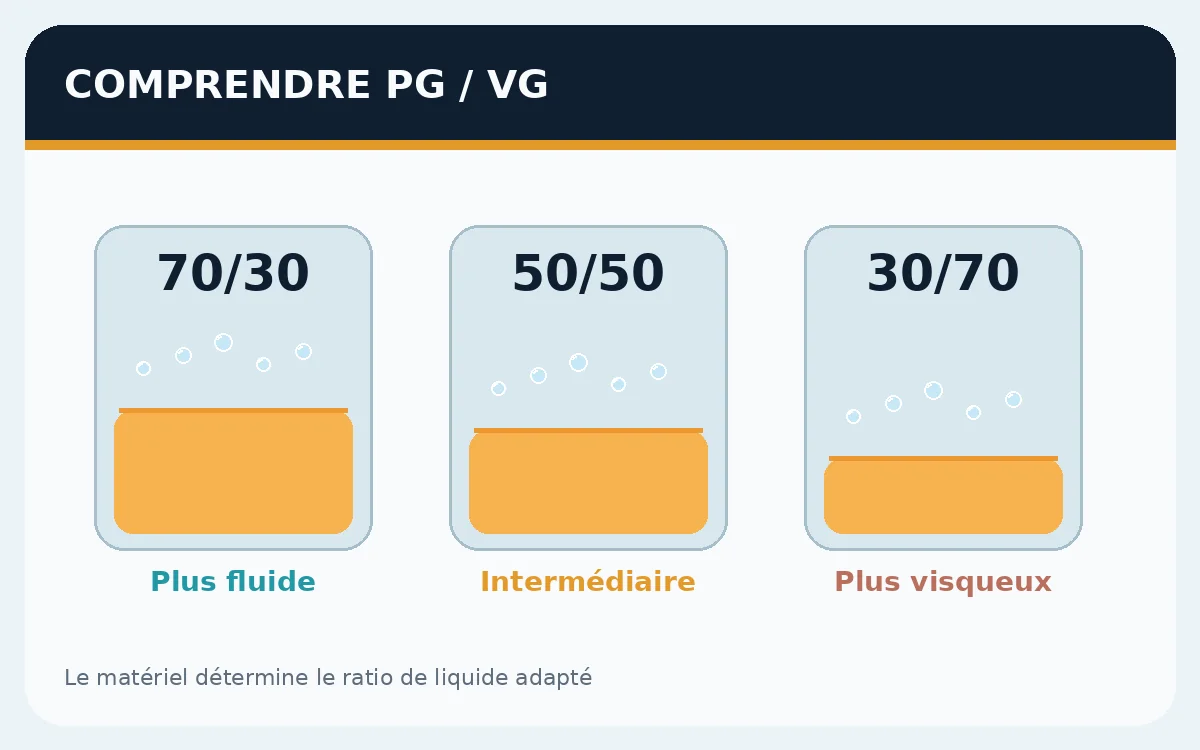
Yes, indirectly. The PG/VG ratio influences e-liquid viscosity and therefore how it moves through the intake openings and wick. This does not mean that one ratio is best for every device.
| Example PG/VG ratio | Relative consistency | Points to check |
|---|---|---|
| 70/30 | Usually thinner | Check compatibility and possible leaking |
| 50/50 | Medium viscosity | Common in pods, but not universally suitable |
| 30/70 | Higher VG and thicker | May feed slowly in some small coils |
Compatibility also depends on flavourings, temperature and device design. The coil or cartridge instructions take precedence over general rules. Never add improvised ingredients to thin an e-liquid.
6. Why does a pod gurgle when bubbles are also visible?
Bubbles visible in the tank usually reflect air movement. Gurgling may instead mean that liquid has collected where air is meant to flow, such as the airflow channel or coil chamber.
Possible causes include improper filling, accumulated condensation, a defective cartridge or a flooded coil. If there is liquid spitting from the mouthpiece, leakage or persistent unusual noise, stop using the device and follow the manufacturer's maintenance instructions. Do not try to fix gurgling by sharply increasing the power.
7. When should a coil or cartridge be replaced?
There is no fixed service life that applies to all models. Wear depends on the coil, e-liquid, frequency of use and maintenance conditions. The following signs warrant inspection or replacement:
- a persistent burnt taste even after proper priming;
- inconsistent liquid supply despite an adequate fill level;
- recurring leaks, cracks or damaged seals;
- unusually low aerosol production after checking the settings;
- a visibly deteriorated coil or unusual odours.
Some pods have a coil built into the cartridge, so the whole cartridge must be changed. In other designs, the coil alone can be replaced using the manufacturer's procedure. Never force open a sealed cartridge.
8. How can future problems be reduced?
Follow the filling and priming directions, do not allow the coil's liquid intakes to run dry, store the device appropriately and use compatible e-liquid. Clean only accessible surfaces as directed by the manufacturer, without inserting tools into the coil.
A few bubbles do not require repair when the equipment works properly. The important factors are associated warning signs: burnt taste, leaks, overheating, prolonged gurgling or visible damage.
9. FAQ: common questions about air bubbles
Yes. A few bubbles rising after refilling or use can be normal and do not, by themselves, indicate a fault.
In some designs, an air pocket close to a coil's liquid inlets can locally restrict flow. Other symptoms must be considered as well.
Avoid vigorous shaking, which can cause leaks. Prefer a visual check, allowing the tank to rest and following the manufacturer's guidance.
The wick can absorb liquid and air moves into the space left behind. Rising bubbles can therefore accompany normal tank operation.
Yes, in some models. A thicker liquid may feed a coil designed for thinner mixtures more slowly. Check the manufacturer's compatibility advice.
An insufficiently saturated wick, low liquid level or deteriorated coil may be responsible. Stop using it until the cause is identified.
No. Bubbles rise through the liquid, while gurgling may result from excess liquid in the airflow path or coil chamber.
It depends on the device. Follow the instructions: some manufacturers mention five minutes, but this is not a universal figure.
If it is damaged, repeatedly leaks, retains a burnt taste or remains faulty after the recommended checks. Pods with integrated coils require replacement of the whole cartridge.
No. Stop using it, allow it to cool safely and consult the instructions or support team. Do not force it back into use.
Conclusion: observe the bubbles and check the symptoms
Small air bubbles in the tank are usually normal. A persistent bubble beside the coil can, however, accompany restricted liquid supply when there is also a dry taste, irregular performance or leaking. Check the level, closure, priming and liquid compatibility without unsafe interventions.
Vaping products are not risk-free, and nicotine is addictive. People who do not smoke should not start vaping. Anyone seeking help to stop smoking can consult a healthcare professional.